How to Support Your Community Reporting

I spent a lot of my time in 2026 dwelling on community and the importance of human connection in sharing experience and transferring institutional knowledge.

Perhaps like many of you, I have seen the decline in LinkedIn content. When LinkedIn launched, it was possible to create and join interest groups. Selling was forbidden, and accounts were blacklisted if someone posted a sales pitch.  

I want to be candid about a concern: it’s getting harder to make sure our newsletters reach your inbox. If you value staying connected with us, please subscribe and mark our newsletters as trusted in your email settings.

We are working against Gemini and Copilot, specifically, which offer up summaries of the emails you receive. But our newsletters go beyond the summaries. They provide the stories and blogs our editors have specifically curated for our community, bringing the expertise that helps you understand what’s happening and why it matters.

Over 300,000 individuals have opted in to receive our content, and I’d hate for you to miss the insights and experience of the talented human beings who write for you and care about you and the industry you work in as it evolves.

We call readers our “audience” in the media industry. Like a performer on stage, our editorial staff compose their words and deliver them to a variety of platforms, including magazines, newsletters, website blogs, YouTube videos, social media handles, and during events. 

Audience seems one-way, though. We appreciate your likes and comments, but we value your subscription most, because it shows us our words matter to you and that you support original writing and reporting on your industry. We measure success through subscriptions as well as your engagement when you read our writing. That is what is missing with Gemini and Copilot: You might not engage with the blogs, articles, and videos, but instead read an AI recap with no interest in, or years of experience in, your industry.

If you follow our media on social, like Automotive Fleet, you’ve started to see our editors introduce themselves throughout this year. This week I saw the talented Faith Howell share the stories Automotive Fleet is working on and why they matter. We hope that by sharing not only our written work with you but also showing you our faces and voices, we’ll connect in a more personal way.  

That’s also why we just launched MyPeer (mypeer.com), a peer-to-peer network where you can connect with peers – no AI slop, no noise – simple connections where our editors are there and part of the discussion.

If you value independent reporting about the industry in which you work, I’m asking you to do something remarkably simple.

Subscribe. Read. Engage.

Subscribe to our newsletters and digital magazines. Mark our emails as trusted so they reach your inbox. Take a moment to open the stories our editors have selected for you. Share an article with a colleague. Leave a comment. Tell our editors what we’re missing.

And join us on MyPeer, where conversations between industry professionals can continue without the noise.

Your subscription tells us you’re interested. Your engagement tells us that our reporting matters. And your participation makes our community stronger.

We’re committed to showing up for your industry every day. I’m asking you to show up for the people who report on it.

Here’s When You Should Make an Exception to Fleet Policy

Crash Tests, Catalytic Converter Theft & Fleet Safety | AF News Recap

This week’s fleet headlines are all about staying ahead of the curve, whether that means keeping drivers safe, protecting vehicles from theft, or making smarter decisions about fleet operations. Plus, we’re talking about why human connections still matter in an increasingly AI-driven world.

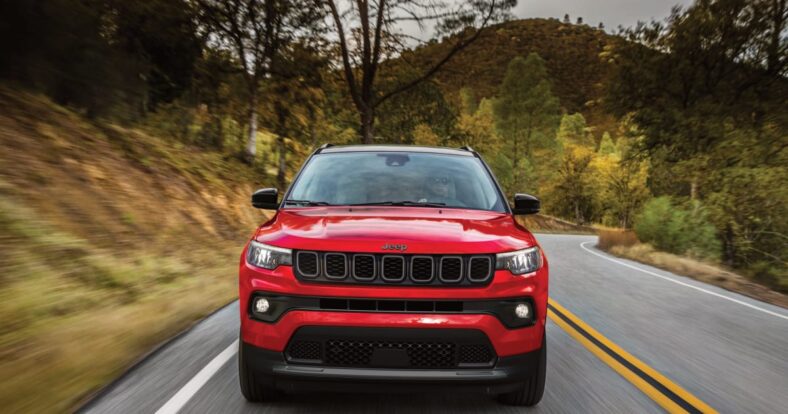
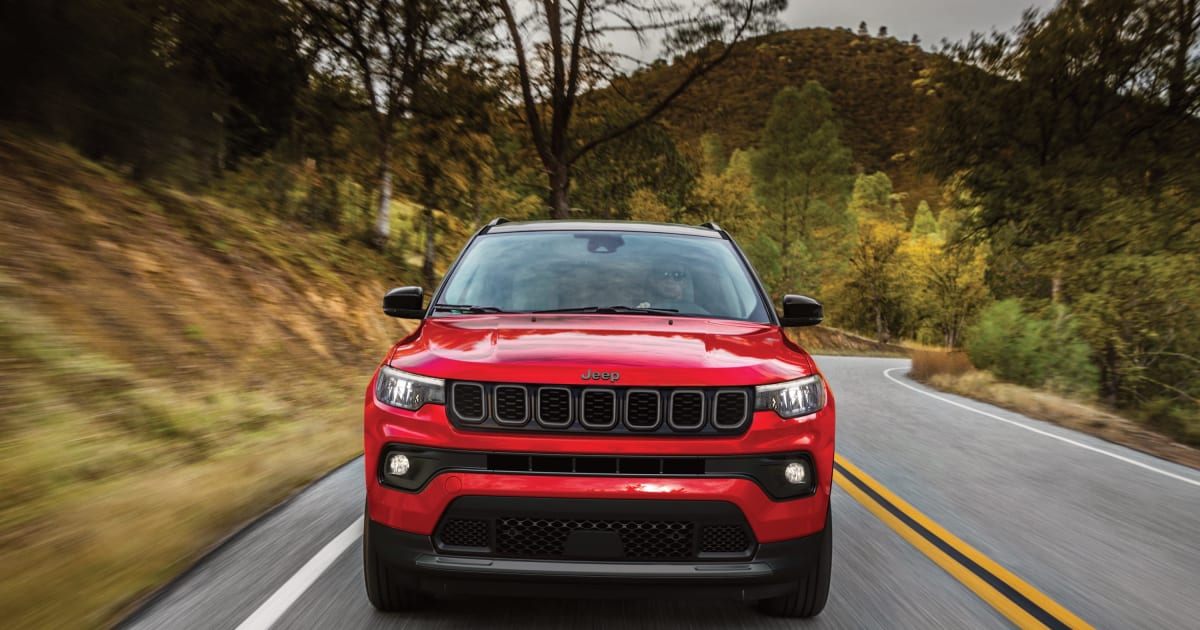
First up, Jeep is giving the 2027 Compass a few upgrades. The compact SUV now comes with standard adaptive cruise control across all five trims, along with additional available safety and technology features. Starting at $31,985, including destination, it’s another option for fleets looking at compact SUVs.

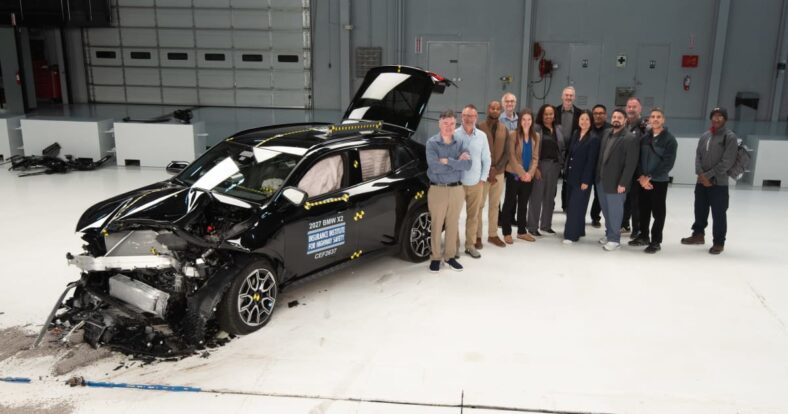
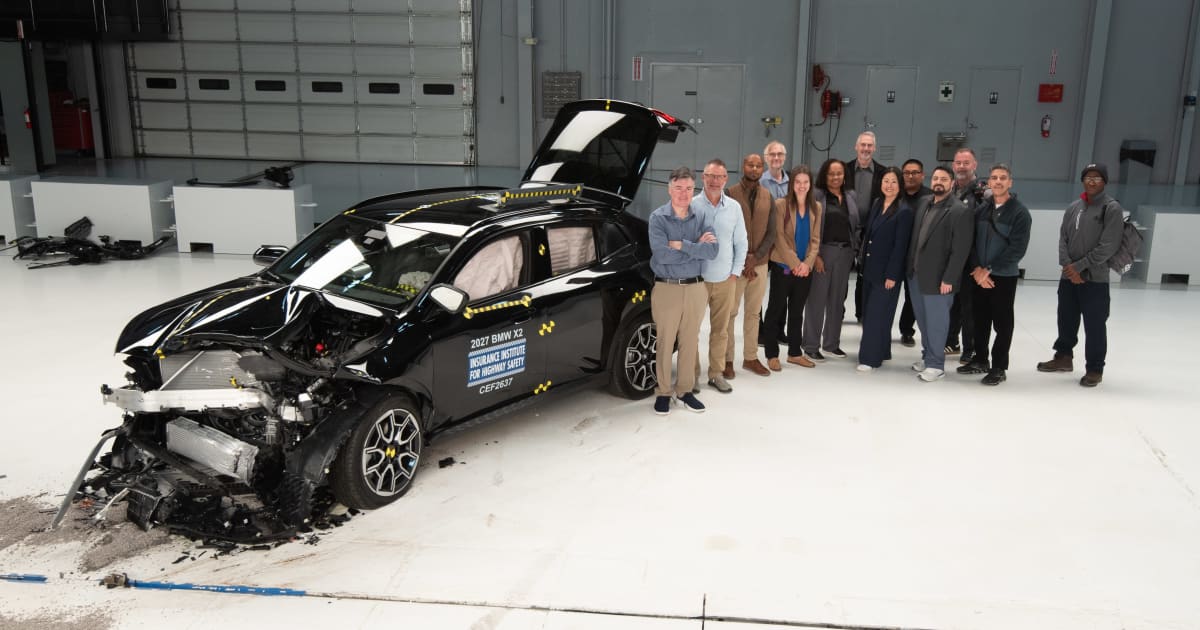
What can fleet managers learn from watching a vehicle crash? Quite a bit, actually. During the 2026 Fleet Forward Conference, attendees visited the Insurance Institute for Highway Safety Research Center, where they watched a live crash test involving a 2027 BMW X2. The experience offered a closer look at how crash ratings, vehicle design, and safety technology can help fleet managers make more informed purchasing decisions.

And here’s something a little different: How do we keep industry journalism going in the age of AI? Bobit CEO Colin Sutherland recently explored that question, emphasizing the value of original reporting, industry expertise, and real conversations. His message? Supporting the publications and people who cover your industry helps keep those connections alive.

Finally, a stolen catalytic converter can turn into a much bigger headache than a repair bill. Between vehicle downtime, lost productivity, and additional expenses, the costs can add up quickly. A new article breaks down how fleet managers can look beyond the replacement cost and take practical steps to reduce theft-related risks.

Make sure you hit that like button and subscribe on our YouTube so you don’t miss future Weekly Cheat Sheet updates and the latest fleet industry news.

Related: Personal-Use Charges Rise as Vehicle Values Fall | AF News Recap

2027 Jeep Compass Adds Standard Driver-Assistance Features, Starts at $31,985

The Jeep Compass enters the 2027 model year with updated standard equipment, additional driver-assistance features and new exterior color options as the model marks its 20th anniversary.

The 2027 Compass is available in five trims: Latitude, Latitude Altitude, Limited, Limited Altitude and Trailhawk.

Orders are now open, with pricing starting at $31,985, including a $1,995 destination charge.

What’s New for 2027?

The 2027 Jeep Compass adds several standard and available features across the lineup.

New equipment includes:

  • Standard adaptive cruise control across all Compass trims.
  • Standard wireless charging pad on Limited, Limited Altitude and Trailhawk.
  • Standard second-row USB ports on Limited, Limited Altitude and Trailhawk.
  • Available Premium Lighting Group with LED headlights, taillights and fog lights on Limited, Limited Altitude and Trailhawk.
  • Available Driver Assist Package with a 360-degree camera and universal garage door opener on Limited, Limited Altitude and Trailhawk.

The Limited Altitude trim is priced $995 above the Limited trim.

Engine and Capability

All 2027 Jeep Compass models are equipped with a standard 2.0-liter turbocharged inline-four engine producing 200 horsepower and 221 pound-feet of torque.

Jeep states that these figures represent best-in-class standard horsepower and torque.

The Compass Trailhawk offers additional off-road capability, including a class-exclusive two-speed power transfer unit (PTU) and Jeep’s Trail Rated designation.

Jeep also claims the Compass offers unsurpassed standard maximum towing capability, although a specific towing capacity was not provided in the announcement.

Exterior Color Options

The 2027 Jeep Compass is available in the following exterior colors:

  • Ghost (new, late availability)
  • Copper Shino (new, late availability)
  • ’41 (new, late availability)
  • Goldilocks (new, late availability)
  • Joose
  • Diamond Black
  • Bright White
  • Sting Gray
  • Red Hot
  • Hydro Blue
  • Fathom Blue

Manufacturing and Availability

The 2027 Jeep Compass is assembled at Stellantis’ Toluca Assembly Plant in Mexico.

Orders for the 2027 model are currently open, with a starting price of $31,985, including destination charges.

Related: The 2026 Jeep Recon, Electrified

How to Reduce the Total Cost of Risk From Catalytic Converter Theft

A stolen catalytic converter can cost fleets far more in downtime and lost productivity than in repairs. A total-cost-of-risk approach can help fleet managers quantify their exposure and prioritize theft prevention.

Few things are more frustrating than arriving at your yard at 5:00 a.m. for a critical delivery or service call and hearing the deafening, tractor-like roar of a vehicle’s stripped exhaust system. In under two minutes, a thief with a $30 cordless saw can cut through an exhaust pipe, take off with your property, and completely derail your operations for days or even weeks.

For fleet managers, dismissing catalytic converter theft as “just an insurance headache” is a serious operational blind spot. This is not petty vandalism—it is a highly coordinated, multimillion-dollar illegal commodity market that directly targets your bottom line. To protect profitability, fleet leaders must shift from a reactive mindset to a proactive framework focused on three core pillars: assessing physical security, calculating true financial exposure, and executing a robust risk mitigation playbook.

Security Assessment: Why Your Fleet is High-Risk

Mitigating risk begins with understanding why your fleet is a prime target. Thieves assess commercial vehicles using a simple formula: high payoff, low effort, and easy liquidity. As a fleet manager, you must audit your property against three critical exposure factors:

  • The “Fleet Jackpot” Vulnerability: Unlike isolated residential driveways, unmonitored commercial yards hold rows of identical, high-value assets, enabling multi-vehicle thefts in one breach for higher payouts and less time on site
  • Asset Accessibility: High-clearance utility vehicles—such as Ford F-Series pickups, E-Series vans, and Chevy Silverados—significantly increase theft exposure. Historical data shows these models dominate theft lists because thieves can slide underneath without a jack, make two cuts, and leave in seconds.
  • The Black-Market Value: Converters contain three exceptionally rare precious metals: platinum, palladium, and rhodium. Rhodium has traded as high as $29,500 per ounce and stolen commercial or hybrid converters can bring up to $1,400 each at illicit scrap yards. The financial incentive is significant.

Financial Exposure: Calculating Total Cost of Risk (TCOR)

A common mistake in fleet management is looking strictly at the replacement part invoice to measure the damage. According to data tracked by the National Automobile Dealers Association (NADA), a standard replacement can easily cost small businesses more than $2,500 per vehicle, with some commercial or hybrid configurations scaling past $4,500.

However, the true financial exposure—the Total Cost of Risk—stems from the consequential expenses resulting from theft:

  • Collateral Damage to Assets: Rushed thieves cut through oxygen sensors, complex wiring harnesses, and nearby exhaust piping instead of unbolting components. A single theft can routinely add thousands of dollars in damage beyond the converter itself.
  • Operational Downtime and Revenue Loss: Persistent OEM exhaust part delays often keep vehicles in repair shops for weeks, generating no revenue. Fleet managers must account for substantial costs from missed service appointments, breached customer delivery contracts, and emergency short-term commercial rentals.
  • Premium Inflation and Deductible Traps: Relying on insurance to cover repeated thefts is unsustainable. Multiple comprehensive claims in one quarter can raise premiums and deductibles. Eventually, your operating budget bears the full cost as you pay out of pocket to avoid losing coverage. This happens all too often

Total Cost of Risk Example: 10 Stolen Catalytic Converters

To estimate the financial impact of losing 10 catalytic converters, a fleet manager must calculate costs across four distinct categories: direct replacement parts, collateral damage, operational downtime and insurance penalties.

Based on the commercial and historical metrics provided by organizations like the National Automobile Dealers Association (NADA) and industry risk trends, here is a cost estimation breakout for a 10-vehicle theft event.

Direct Replacement Parts Cost

Standard commercial, hybrid, or heavy-duty fleet configurations incur significantly higher part costs than standard consumer sedans.

  • Per Vehicle Cost: $2,500 to $4,500+ (depending on truck/van model).
  • Subtotal for 10 Vehicles: $25,000 to $45,000+

Collateral Damage to Assets

Because rushed thieves use high-speed cordless saws to cut through systems in under two minutes, they routinely cause additional damage. This damage adds thousands of dollars per vehicle to the repair invoice.

  • Damaged Components: Oxygen sensors, complex wiring harnesses, and surrounding exhaust piping.
  • Estimated Collateral Cost: $1,500 to $3,000 per vehicle in extra parts and specialized labor.
  • Subtotal for 10 Vehicles: $15,000 to $30,000

Operational Downtime & Revenue Loss

Stubborn OEM supply chains mean vehicles often sit stranded in repair shops for three weeks or more. A fleet vehicle that is not on the road is actively draining revenue.

  • Overhead Factors: Emergency short-term commercial rentals (approx. $100 $150/day per vehicle), missed deliveries and service appointments.
  • Estimated Downtime Cost: $3,500 to $7,000 per vehicle (calculated as 21 days of vehicle rental fees + lost operational productivity).
  • Subtotal for 10 Vehicles: $35,000 to $70,000

Insurance “Deductible Trap” & Long-Term Premium Inflation

While a fleet manager might assume insurance will cover this $75,000 to $145,000+ hit, claiming 10 thefts simultaneously or within a single quarter may trigger longer-term financial penalties: 

  • The Deductible Hit: With a $1,000 per-vehicle commercial policy deductible, you immediately pay $10,000 out of pocket before coverage begins.
  • Premium Escalation: Filing a claim for 10 converters at once will almost certainly inflate your renewal premiums for subsequent years.
  • Policy Non-Renewal: Insurers regularly drop commercial clients or deny renewal after multi-vehicle theft spikes, forcing fleet managers to pay all future losses out of pocket to preserve remaining insurability.

Risk Mitigation: The Layered Operational Playbook

Fulfilling your responsibility to protect company assets requires a dynamic, multi-layered defense. Relying on a standard chain-link fence and a passive security camera that merely records the theft is a losing strategy. Fleet managers must implement an active playbook that alters the risk-reward equation for the criminal.

Phase 1: Perimeter and Property Control

The goal is to detect and deter intruders before they ever touch a vehicle.

  • Active, AI-Driven Monitoring: Upgrade from passive recording to modern video systems integrated with AI analytics. These systems flag human movement between vehicle rows after hours, instantly triggering live audio warnings to scare off trespassers while sending a priority dispatch to local law enforcement.
  • Defensive Parking Formations: This is a zero-cost operational tactic relying on driver discipline. Fleet managers should mandate that high-clearance assets be parked in tight, geometric configurations, either bumper-to-bumper or flush against concrete yard walls. This physically blocks ground clearance, stripping thieves of the space they need to slide underneath with a saw.

Phase 2: Physical Asset Hardening

If your perimeter is breached, a layered deterrence strategy will make the theft too time consuming and unprofitable.

  • Physical Shields and Cages: Heavy-gauge steel plates or robust cable cages fully enclose the converter assembly. Thieves seeking a 60-second payday will immediately bypass vehicles requiring 15 minutes of grinding through hardened steel.
  • Traceable Component Marking: Permanently marking or engraving a converter with a unique identifier registered in a law enforcement database creates an immediate compliance barrier. Legitimate recycling yards refuse clearly marked, traceable converters, sharply limiting thieves’ ability to sell them.
  • Telematics Integration: Work with your fleet telematics provider to configure compatible existing onboard systems for instant mobile alerts when they detect high-frequency vibrations from a saw cutting a parked vehicle’s exhaust pipe.

The Strategic Outlook

As a leader, mitigating risk also means staying ahead of the regulatory curve. There is strong momentum behind federal legislative marking solutions, such as the bipartisan Preventing Auto Recycling Theft (PART) Act. Backed by NADA, this bill aims to require automakers to stamp a unique, traceable ID linked to the VIN directly onto converters at the factory, strictly ban cash or cryptocurrency payouts for scrap, and introduce five year federal prison sentences for trafficking.

Proactively deploying traceable marking across your fleet today is an effective, low-cost deterrence and security measure.

Protecting your fleet from the operational chaos of converter theft is an ongoing exercise in operational discipline. By accurately calculating your financial exposure and deploying an aggressive, layered defense, you can transform your fleet from an easy target into a high-risk, low-reward headache for criminals. Audit your yard through the eyes of a risk manager tonight and seal the gaps before the next saw starts turning.

About the Author: Brian Murphy is President of AutoPrime Financial, an automotive finance, insurance, and security services company, and the creator of SAFECAT, a leading national catalytic converter theft deterrent program.

Related: Tips for Strategic Parts Inventory Management

AI-Native or AI-Acquired: What Should Fleet Managers Look for in an AI Platform?

Six questions can help fleet managers look beyond AI marketing claims to evaluate integration, data access, and real-world operational performance.

Nearly every fleet management platform on the market today claims some version of AI capability. For fleet managers evaluating a new technology investment, however, the label alone says little about how effectively that capability will perform in practice.

The more important question is what role AI plays in the platform’s underlying architecture. Is it foundational to how the system operates, or is it an additional capability layered onto an existing technology stack? That distinction is worth examining as fleet technology providers expand their AI capabilities through both internal development and acquisitions.

When fleet managers are thinking about a new vendor, the question is not necessarily whether a platform was built with AI from the ground up or gained AI capabilities through an acquisition. It is whether the resulting platform integrates AI deeply enough into its data and workflows to improve how the operation actually functions.

How AI Gets Into A Platform Matters

Fleet software is in the middle of a consolidation wave. Strategic acquirers made up 62% of lower middle market SaaS transactions in 2025, up from 55% in 2023, as vendors increasingly use acquisitions to fill capability gaps and defend market position rather than build every layer themselves.

In fleet management specifically, that often means an established maintenance authorization platform acquiring data or AI capability, then marketing the combined company as AI native. Independent analysis of the AI fleet technology market cautions against taking that label at face value, noting that legacy architectures can limit AI integration depth compared with purpose-built alternatives even after the technology is deployed, because the underlying data model, workflow logic, and decision points were designed for an earlier era of maintenance software.

But the distinction should not be reduced to a simple built-versus-bought comparison. An acquired AI capability can be valuable if it is integrated deeply into the platform’s underlying data, workflows, and decision-making processes. Conversely, an AI-native label does not, by itself, guarantee that a platform will deliver better operational results.

A platform built from the ground up to feed live telemetry, maintenance history, and authorization data into a single predictive loop may have an architectural advantage, but the practical question for a buyer is whether the platform being evaluated gives AI access to the information it needs, when it needs it, and whether those insights flow back into the operational workflows where decisions are made.

That makes integration depth a more useful evaluation criterion than the origin of the technology. A fleet manager should be able to determine whether AI is working from the same operational data that powers the platform, whether information moves between systems in real time, and whether AI-generated insights can trigger or inform action without creating another disconnected layer.

What Fleet Managers Should Test

The practical difference shows up in speed and depth. Deloitte’s Future of Freight research, cited in a 2026 supply chain modernization analysis, found that route planning on legacy transportation management systems can take four to eight hours to produce, while AI-native systems compute the same output in minutes, a gap the analysis attributes to architecture built for real-time computation from the start rather than to better algorithms alone.

Predictive maintenance offers another useful test, especially when you consider a platform’s ability to pull continuous data from vehicle diagnostic ports and telematics, reconcile that information with maintenance history and other operational records, and apply those signals in real time can be more important than whether the underlying AI was developed internally or acquired.

A platform can, for example, read current telematics data, map it against historical maintenance events and other operational records, and use those combined signals to create a more comprehensive view of what is happening, what may be causing it, and what action is most likely to address it.

Continuous ingestion and cross-system data access allows AI models to identify patterns associated with component failures weeks before a scheduled inspection would catch them, according to a 2026 buyer’s guide for fleet AI tools, which also found that 73% of fleets still run reactive maintenance programs that cost several times more than planned repairs.

For a fleet manager evaluating an acquired AI capability, this creates a practical set of questions: Can the AI access the platform’s operational data continuously? Can it reconcile information from different systems without relying on manual intervention or delayed data transfers? And, once the AI identifies a pattern or recommends an action, does that insight feed directly into the workflow used by the people responsible for acting on it?

The same questions can be applied to an AI-native platform. Being built around AI from the beginning may support deeper integration, but buyers should still test how the technology works in the specific workflows they depend on. The goal is to understand what the platform actually does, not simply how the vendor describes its architecture.

Why This Matters for a Five-to-Ten-Year Bet

Fleet software decisions rarely function as simple annual subscriptions in practice, even when the contract is written that way. The platform selected today shapes operational efficiency, compliance posture, and cost structure for years afterward, since switching later carries real cost once telematics, maintenance, and dispatch data are deeply embedded in one system. With more than 140 vendors competing in the fleet software market and 61% of fleet managers who skipped a rigorous evaluation process reporting dissatisfaction with their platform within 18 months, the architecture question deserves more scrutiny than a single product demo typically provides.

For fleet managers considering a new vendor, that evaluation can start with a few straightforward questions:

  • What changed structurally when AI was added? If the capability was acquired, which parts of the underlying data model and workflow architecture were changed to support it?
  • Does the AI operate on the same live data used by daily operations, or does it rely on a separate, synchronized copy
  • How does the platform reconcile data from telematics, maintenance, authorization and other systems, and how quickly does that information become available to the AI?
  • When the AI produces a prediction, recommendation or alert, where does that information go? Does it feed directly into an existing workflow, or does someone have to move the information into another system before action can be taken?
  • If an AI capability was acquired, how long did it take to integrate the technology and data models, and is that integration complete?
  • Most importantly, what can the combined platform do today that neither technology could do independently?

These questions help move the evaluation beyond a product demonstration and toward the architecture that will determine how the technology performs after implementation.

A platform that has expanded its capabilities through acquisition may ultimately perform as well as, or better than, one built entirely in-house. However, that outcome should be demonstrated rather than assumed. The relevant question is whether the underlying technologies are integrated deeply enough for AI to access, reconcile and interpret the data required to understand an issue in context, and whether those insights translate into action within the operational workflow. That is also why fleet managers should resist treating “AI native” as a proxy for performance. An AI-native platform may have architectural characteristics that support deep integration, while an acquired capability may deliver similar value if the integration is thorough and operationally meaningful. The buyer’s responsibility is to determine which is true in the platform being evaluated.

As AI becomes a more common part of fleet technology, the distinction between built and bought will become less useful to buyers than the quality of the integration itself. Fleets making a multi-year technology commitment should look past the label on the homepage and evaluate what is actually running underneath it: what data the AI can access, how that data moves through the platform, how AI insights connect to daily workflows, and whether the resulting capabilities produce measurable operational improvements.

The question, ultimately, is not whether a platform is AI native or AI adjacent. It is whether the AI is integrated deeply enough to make the platform more useful, more responsive and more capable of helping fleet managers make better decisions.

About the Author: David Prusinski is the CEO of VMS.AI, a leader in AI-based uptime management. He is a 30 year technology veteran with 15 years dedicated to pioneering connected vehicle solutions. He most recently served as the Global CRO for Integrated Services at Ford Motor Company, scaling connected services for both the fleet and retail sectors.

Related: How to Handle Vehicle Offboarding

What Fleet Managers Learned from IIHS Crash Testing

Fleet Forward Conference attendees witnessed a live crash test at IIHS’s site, explored vehicle safety technology, and learned how IIHS research can inform fleet purchasing decisions.

Fleet managers received a firsthand look at vehicle crashworthiness and emerging safety technologies during an excursion to the Insurance Institute for Highway Safety (IIHS) Research Center in Ruckersville, Virginia, on Oct. 20.

Held alongside the 2026 Fleet Forward Conference, the excursion brought together representatives from major automakers, public and private fleets, commercial fleet operators, and roadway-safety organizations.

Attendees toured the research facility, examined vehicles from previous crash tests, witnessed a live frontal collision test, and participated in demonstrations highlighting safety considerations for commercial vehicles.

Art Kinsman, chief strategy officer for the Network of Employers for Traffic Safety, shared his thoughts with Automotive Fleet. 

“Beyond the incredible sensory experience of actually witnessing a crash test (you really have to see and hear one to appreciate it!), I was particularly fascinated, from a NETS perspective, by the vehicles used to test side underride protection, including the innovative “AngelWing” system designed to prevent passenger vehicles from sliding beneath tractor-trailers” 

Inside the IIHS Research Center

IIHS President David Harkey opened the visit with an overview of the institute’s history, research methods, and role in improving vehicle safety.

Eric Richardson, founder and principal at EBR Safety Solutions, attended the excursion and described the institute’s testing procedures and independence from vehicle manufacturers.

“He explained that IIHS is funded by insurance companies across the US and Canada, not by car manufacturers, and that the vehicles it tests are bought off dealer lots through random selection,” Richardson said.

The institute conducts several types of crashworthiness testing, including offset frontal collisions, seat belt performance assessments, and evaluations of front and side airbag deployment.

IIHS estimates its work since 1999 has saved more than 50,000 lives on U.S. roads, according to Richardson’s account of the visit.

“There is no doubt it has pushed manufacturers to improve crashworthiness and occupant protection, and the changes OEMs have made to their vehicles over the years bear that out,” Richardson said.

The research center also provided attendees with a look at how vehicle safety has evolved over the past three decades.

“One highlight was an April 2026 vehicle-to-vehicle test pitting a 1996 Chevy Blazer against a 2026 Chevy Blazer: the older vehicle suffered a catastrophic collapse of the occupant compartment, while the current model kept its cabin intact and its crumple zone absorbed the energy of the collision,” Richardson said.

Attendees also examined vehicles involved in rear and side underride testing with tractor-trailers, small- and moderate-overlap crash tests, and crash test dummies used to measure potential occupant injuries.

“I’ve noticed similar side guards on trucks around Boston, deployed to help protect bicyclists and pedestrians,” Kinsman said.

The experience also led to an unexpected connection with someone involved in developing the technology.

“But here’s where the story gets interesting. That evening, completely by coincidence, I found myself sitting at dinner next to Robert Martineau of AirFlow Side Guards, one of the people behind the development of the AngelWing technology! What were the odds? We had a terrific conversation about the technology and its potential to save lives, prevent serious injuries, and reduce the enormous human and financial costs of crashes,” Kinsman said.

“To me, that perfectly captures Fleet Forward’s value: connecting the road safety challenges we’re trying to solve, the innovations that can make a difference, and, perhaps most importantly, the people behind those solutions.”

Live Crash Test Demonstrates Protection

One of the excursion’s central demonstrations was a live frontal crash test involving a 2027 BMW X2.

“No trip to IIHS would be complete without a crash, so we watched a frontal crash test of a 2027 BMW X2 being evaluated for passenger impact,” Richardson said.

The test results were not available at the time of the excursion.

Attendees also reviewed IIHS vehicle rating categories, which evaluate safety characteristics including seat belt reminders, headlights, frontal and side crash protection, and pedestrian collision avoidance systems.

These evaluations provide fleet managers with additional information to consider when selecting vehicles and developing safety policies.

The IIHS crash site testing was done at max crush.

Expanding Safety Research to Commercial Vehicles

Beyond passenger vehicles, IIHS is expanding its research into vehicles commonly used in commercial and government fleet operations, including cargo vans and pickup trucks.

“We also heard how IIHS is expanding into vehicles that support commercial and government operations, such as cargo vans and pickups, with testing of automatic braking and pedestrian avoidance systems,” Richardson said.

The institute is also examining technologies such as intelligent speed assistance and systems intended to address distracted and impaired driving.

During the visit, attendees participated in hands-on demonstrations involving vans and pickups, with a focus on driver visibility and collision avoidance technology.

“It showed how vehicle design can leave drivers with poor direct vision, how automatic braking can make the difference in surviving a crash or in a vulnerable road user surviving one, and how rear emergency alerts perform in the real world,” Richardson said.

Applying IIHS Research to Fleet Safety

The excursion reinforced a message Harkey delivered the following day at the Fleet Forward Conference: Vehicle safety research depends on fleet operators and other transportation stakeholders putting the findings into practice.

“That ties directly to David Harkey’s message at Fleet Forward the next day: IIHS’s work only succeeds if we do our part,” Richardson said.

Richardson emphasized the importance of incorporating safety evaluations into fleet purchasing decisions.

“We need to encourage the people who make fleet purchasing decisions to factor in IIHS ratings, evaluations, and Top Safety Pick awards,” Richardson said.

He also pointed to participation in initiatives such as the FIA Foundation Road Safety Index and adopting safer vehicle technologies as additional ways organizations can contribute to roadway safety.

IIHS has called for a 30% reduction in U.S. Road fatalities by 2030, according to Richardson’s account.

For fleet managers, the excursion highlighted how vehicle selection, crash-avoidance technology, and driver visibility can shape safety outcomes across commercial operations.

Related: What Happened at Fleet Forward Conference 2026?

Personal-Use Charges Rise as Vehicle Values Fall | AF News Recap

Personal use of company vehicles remains a common fleet benefit, but more employers are charging employees for it.

According to Automotive Fleet’s 2026 Personal Use Survey, 79% of responding fleets allow employees to use company vehicles for personal travel, up from 72% in 2024. Among respondents answering the personal-use charge question, 54% assess a fee, compared with 48% in the previous survey.

We’re also looking at how traditional fleet management is becoming part of autonomous vehicle operations.

Element Fleet Management is expanding its partnership with Waymo to support the autonomous vehicle company’s planned launch in Toronto, its first Canadian market.

Through its Element Mobility division, Element will oversee fleet operations, including maintenance, charging, energy management, infrastructure, and vehicle readiness. The company will also help coordinate the personnel and facilities needed to keep vehicles cleaned, maintained, charged, and available for service.

Waymo plans to begin with manually driven vehicles collecting mapping data and evaluating local road conditions before progressing to autonomous testing. Public passenger service is targeted for 2028.

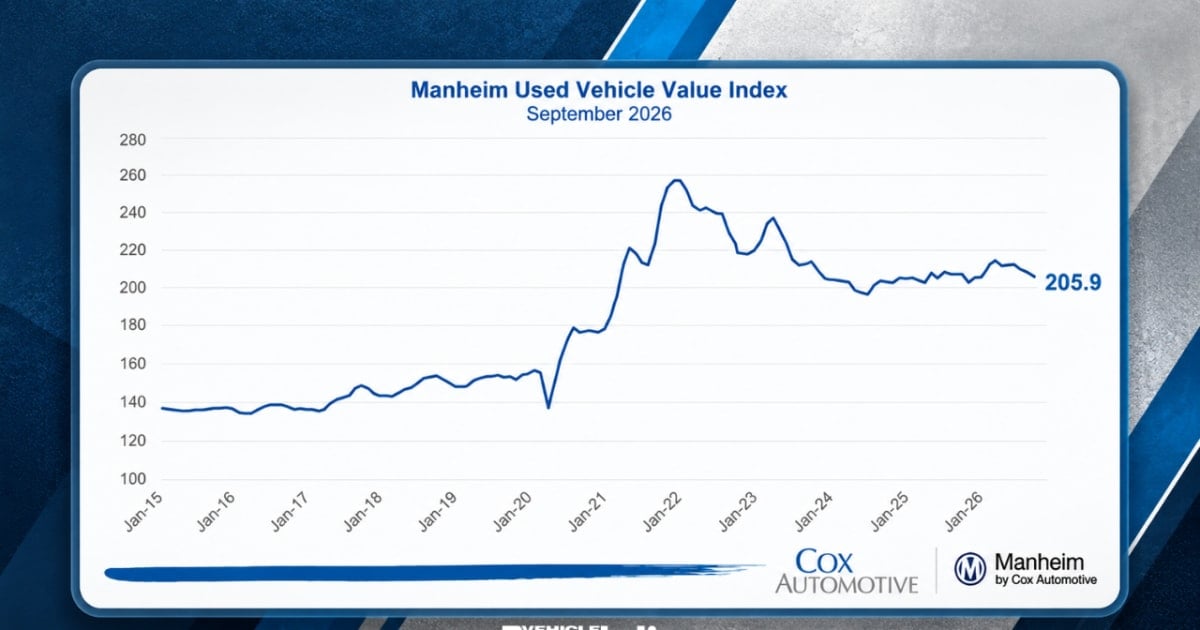
Meanwhile, wholesale used-vehicle values declined in September, prompting Cox Automotive to lower its forecast for the remainder of 2026.

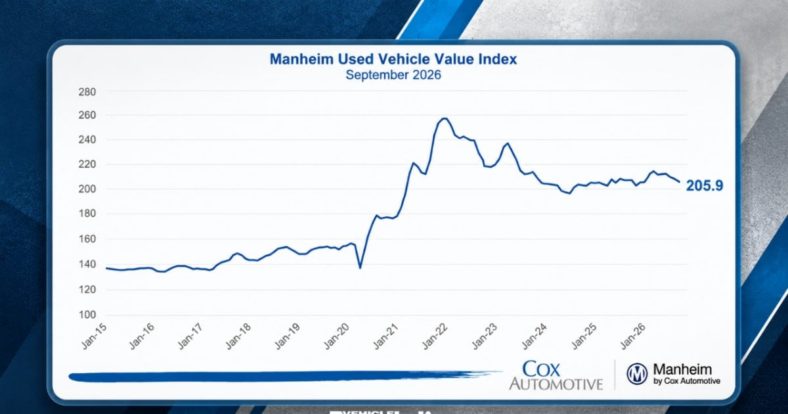
The Manheim Used Vehicle Value Index fell to 205.9, down 1.1% from August and 0.6% from a year earlier after adjustments for vehicle mix, mileage, and seasonality.

Cox Automotive now expects the index to finish 2026 approximately 0.2% above its year-earlier level, down from its previous forecast of 2% growth.

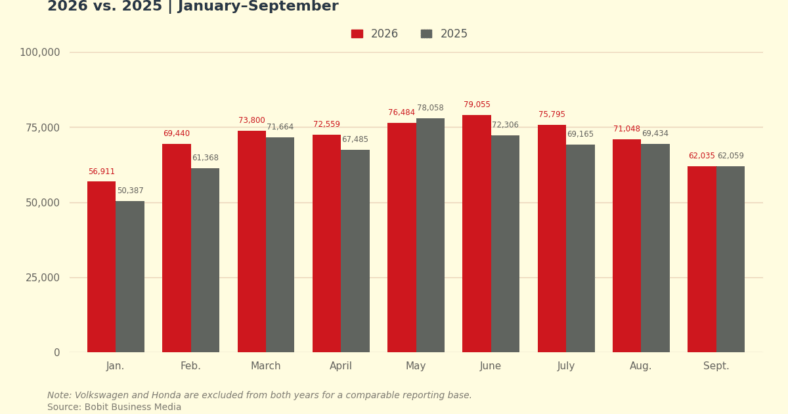
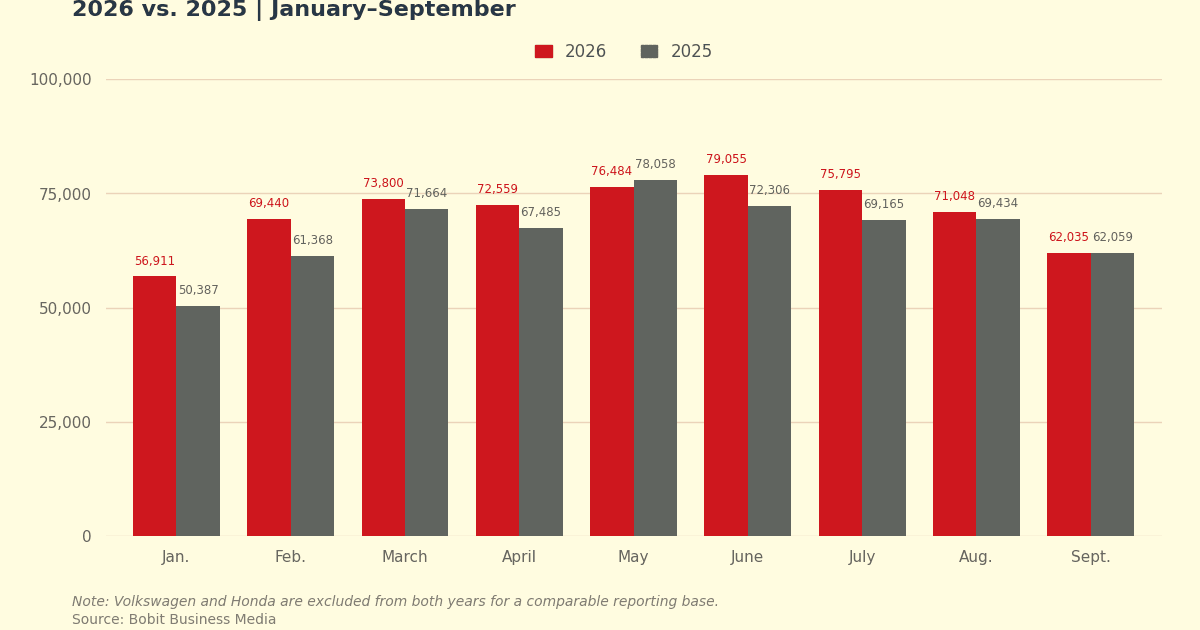
And finally, commercial fleet sales remain ahead of last year, although growth has moderated.

September sales were nearly unchanged from a year earlier, following a 2.3% increase in August and a 9.6% increase in July.

That brought year-to-date growth down from 7.1% through July to 5.8% through September.

Commercial fleets remain the largest contributor to year-to-date growth among commercial, rental, and government fleet segments. However, monthly sales can fluctuate because of production schedules, vehicle availability, replacement cycles, and the timing of large orders.

Make sure you hit that like button and subscribe on YouTube so you don’t miss future Weekly Cheat Sheet updates and the latest fleet industry news!

Related: The Future of Fleet + What’s Changing Right Now | AF News Recap

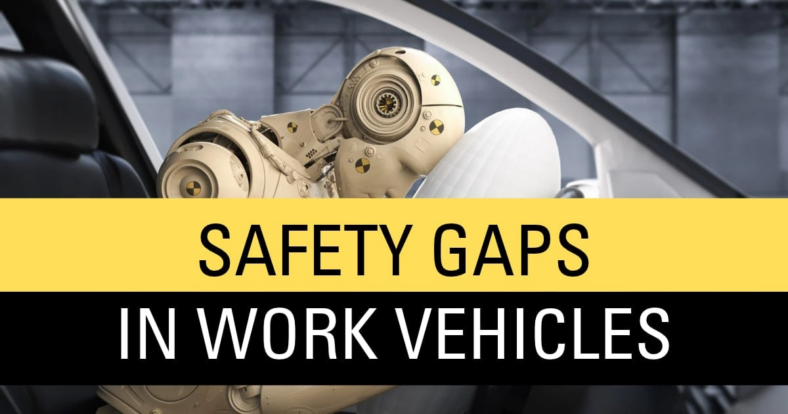
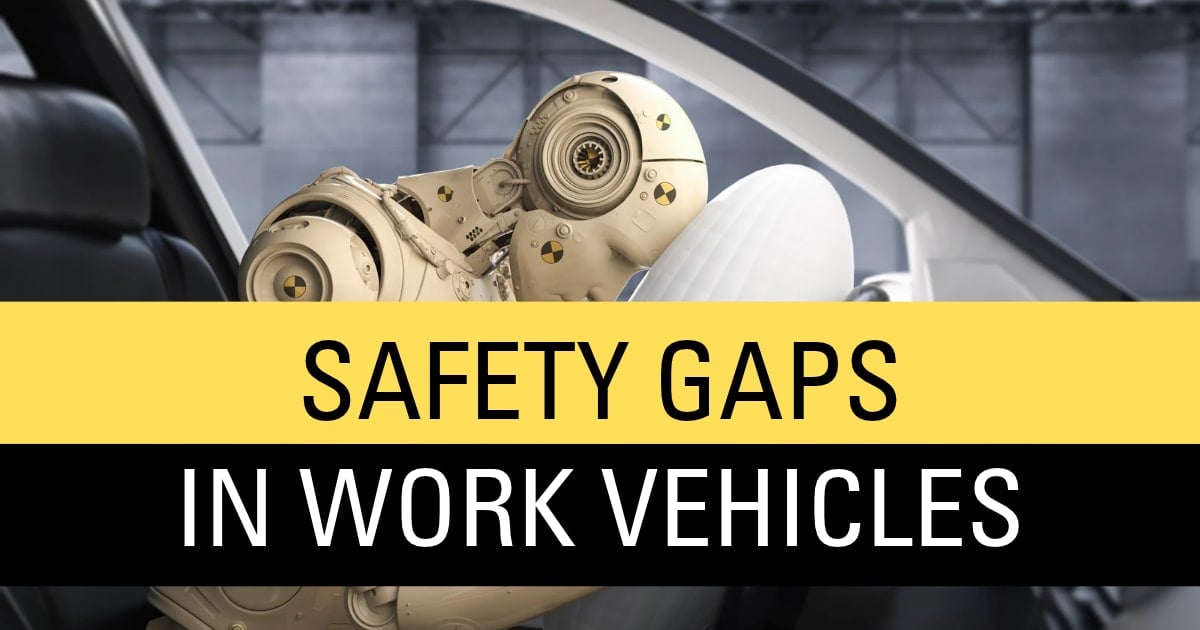
IIHS Crash Avoidance Tests Reveal Safety Gaps in Cargo Vans and Work Trucks

New evaluations from the Insurance Institute for Highway Safety (IIHS) show that cargo vans and Class 3 pickup trucks are falling behind passenger vehicles in front-crash prevention performance.

Initial assessments found that marginal and poor ratings were common among commercial vehicles tested for vehicle-to-vehicle and pedestrian crash avoidance.

The findings could affect commercial fleets as they evaluate vehicle safety features and make purchasing decisions, particularly as automatic emergency braking (AEB) and other driver assistance systems become more common.

Commercial Vehicles Face New Safety Evaluations

Initial testing focused on cargo vans and Class 3 pickup trucks with gross vehicle weight ratings between 10,001 and 14,000 pounds.

Unlike the Institute’s earlier commercial vehicle driver protection assessments, the new crash avoidance tests use the same protocols and four-tier rating system applied to passenger vehicles: good, acceptable, marginal, and poor.

The vehicle-to-vehicle evaluation measures the effectiveness of forward collision warning and AEB systems in scenarios involving passenger vehicles and motorcycles. IIHS also evaluates forward collision warnings using a semitrailer target.

“IIHS evaluates automatic emergency braking in unloaded conditions or, in some cases, incomplete builds. Although heavy loads and upfits may affect performance, the immediate priority is expanding availability and demand,” explained David Kidd, vice president of Vehicle Research at IIHS. “Our ratings recognize manufacturers that equip commercial vehicles with effective, high-performing crash avoidance features.”

Pedestrian crash prevention testing examines how well vehicles detect and respond to adults and children in daytime and nighttime scenarios.

Cargo Vans Show Mixed Crash Prevention Performance

Among the cargo vans evaluated, the Mercedes-Benz Sprinter 2500 was the only model to receive a good rating for vehicle-to-vehicle front crash prevention.

The Chevrolet BrightDrop 400 received an acceptable rating, while the remaining vans earned marginal or poor ratings.

The Chevrolet Express 2500 and GMC Savana 2500 received poor ratings in both categories because neither offers AEB. Both models offer optional forward collision warning systems.

“Safety is an operational requirement. An on-the-job crash costs employers more than $55,000 on average, and far more when someone is injured or killed. Our ratings show fleet managers which cargo vans and heavy-duty pickups offer the strongest protection against crashes with pedestrians and other vehicles,” added Kidd.

Motorcycle detection was a particular challenge across the vehicles tested. Several systems failed to issue warnings or reduce speed in most motorcycle test scenarios.

Other vehicles could reduce speed or avoid collisions but received lower ratings because their warning systems did not give drivers enough advance notice.

Pedestrian Detection Performance Varies

Commercial vehicles generally performed better in pedestrian crash avoidance testing, although several models struggled under specific conditions.

The Chevrolet BrightDrop 400 and Rivian RCV-Delivery 500 received good ratings for pedestrian crash prevention, while the Mercedes-Benz Sprinter 2500 earned an acceptable rating.

Among Class 3 pickups, the Ford F-350 and Ram 3500 received acceptable ratings. Both vehicles also had greater difficulty detecting and avoiding a child pedestrian during daylight conditions than an adult pedestrian at night.

Researchers indicated that the height of the vehicles’ front ends and the positioning of detection sensors near the rearview mirror may contribute to the problem.

Nighttime performance also presented challenges. Several marginal- and poor-rated systems failed to reduce speed sufficiently when approaching an adult pedestrian, with some performing worse under low-beam headlights than high beams.

How Commercial Vehicles Performed

The following ratings reflect the models and model years evaluated by IIHS.

What the Findings Mean for Commercial Fleets

The evaluations highlight differences in crash avoidance technology across commercial vehicle models, even among vehicles serving similar operational purposes.

For fleet managers, the results provide another consideration when comparing vehicles for acquisition or replacement. AEB availability alone does not necessarily indicate how effectively a system will perform across different collision scenarios.

The findings also highlight the limitations of certain systems in detecting motorcycles and pedestrians, particularly children. IIHS plans to continue evaluating Class 3 commercial vehicles through 2027, adding assessments of headlights and rear automatic emergency braking.

Testing will eventually expand to larger Class 4–6 trucks, providing additional safety performance information for commercial fleet operators managing heavier vehicles.

When Should a Fleet Repair Vehicle Damage Before Remarketing?

Joseph Lukacs Wins 2026 Global Fleet Manager of the Year

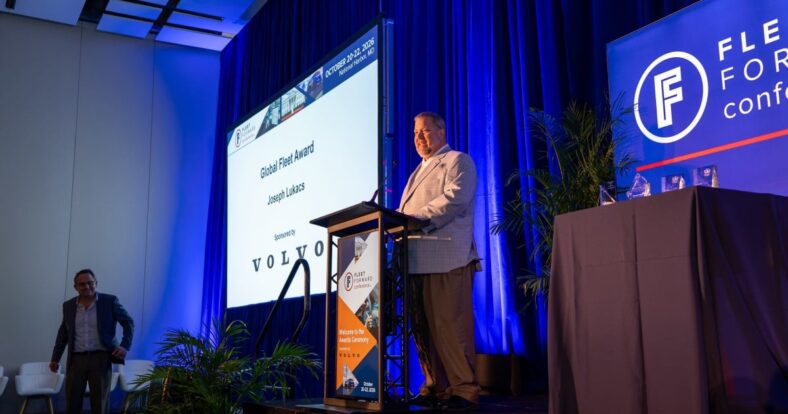
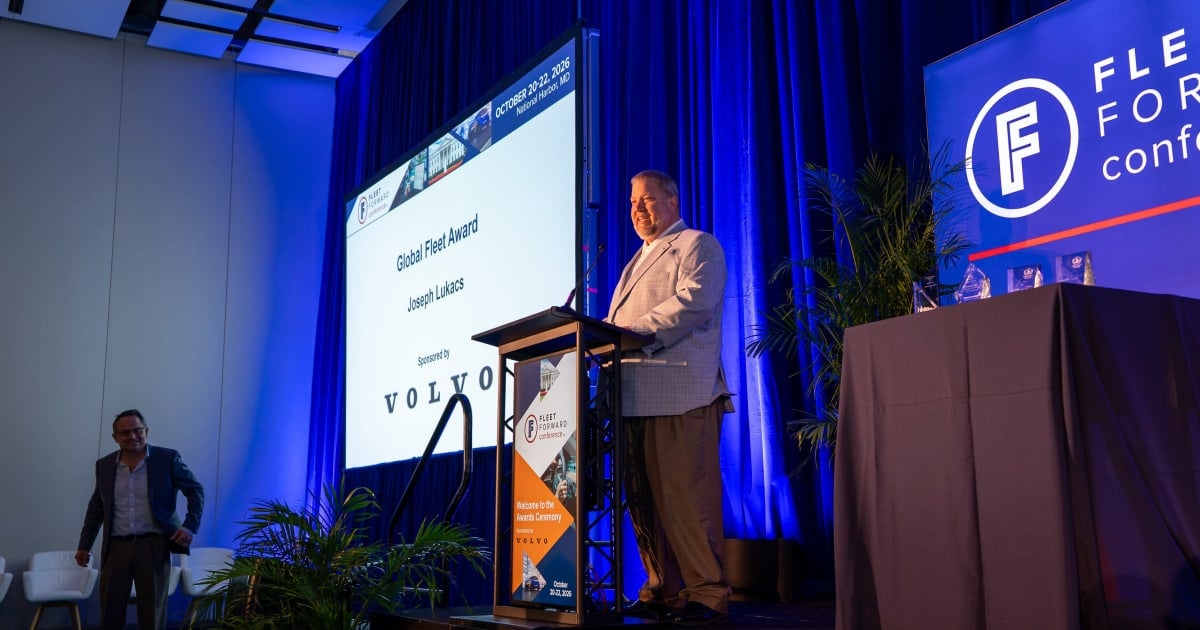
Joseph Lukacs, global director of fleet operations at Sherwin-Williams, has been named the 2026 Global Fleet Manager of the Year. He will receive the award today, October 21, at the Fleet Forward Conference.

The recognition marks his second major fleet industry award in consecutive years, following his selection as the 2025 Edward J. Bobit Professional Fleet Manager of the Year.

Lukacs has spent more than 28 years with Sherwin-Williams, including more than a decade in fleet management. He oversees a global fleet of more than 12,000 vehicles, with more than 8,500 operating in the United States, according to 2025 figures.

“I am truly honored and humbled to accept the Global Fleet Manager of the Year Award,” Lukacs said in his acceptance remarks. “To be recognized among so many talented professionals is incredibly meaningful.”

Chris Brown of Automotive Fleet (left) and Joseph Lukacs (right) at the 2026 Fleet Forward Conference.

Driving Global Fleet Performance

Throughout his career, Lukacs has focused on improving fleet efficiency, reducing costs, and advancing sustainability initiatives across Sherwin-Williams’ vehicle operations.

His accomplishments include converting more than 10% of the company’s California commercial vehicles to electric vehicles, contributing to a reported 4.1% reduction in fleet CO2 emissions since 2023.

Lukacs also leveraged favorable vehicle remarketing conditions in 2024 to generate multimillion-dollar gains for Sherwin-Williams. His work with industry partners helped establish a monthly remarketing forecasting process to improve budgeting accuracy.

Beyond financial and sustainability improvements, he has collaborated on vehicle modifications, including customized ramp solutions designed to improve the safety of product deliveries.

Lukacs has also contributed to the broader fleet industry through his involvement with the General Motors Fleet Advisory Board and Wheels’ Customer Advisory Board, sharing insights and helping shape fleet management strategies.

Recognizing the People Behind the Success

Lukacs emphasized the importance of the relationships and partnerships that have supported his career.

“While this award may bear my name, it reflects the dedication, teamwork, and support of many people throughout my career,” he said.

Lukacs credited Sherwin-Williams’ leadership and his fleet team for their continued support and recognized industry partners Wheels, Ayvens, Ford, General Motors, Toyota, Wabash, Masterack, and FLD for their contributions to the company’s fleet program.

“Their collaboration and expertise have helped us build a fleet program we can all be proud of,” he said.

He also thanked his mentors, industry peers, and family, including his wife, for their support throughout his career.

Looking ahead, Lukacs expressed optimism about the industry’s direction and the opportunities presented by emerging technology and sustainability initiatives.

“As our industry continues to evolve through technology, sustainability, and innovation, I am excited about what the future holds,” Lukacs said. “I accept this award with gratitude, humility, and a renewed commitment to excellence.”

Chad Edmondson Named 2026 Fleet Safety Award Winner


Chad Edmondson Named 2026 Fleet Safety Award Winner

Chad Edmondson, director of Fleet Services at VSC Fire & Security, was named the 2026 Fleet Safety Award winner. The American Automotive Leasing Association (AALA) and Automotive Fleet magazine presented the award on October 21 at the 2026 Fleet Forward Conference.

With more than 16 years of experience in commercial and public sector fleet operations, Edmondson has focused on developing fleet programs that prioritize driver safety, organizational collaboration, and employee engagement.

Since joining VSC Fire & Security in 2021, Edmondson has led the development and implementation of a centralized fleet management program, which now oversees more than 1,100 fleet assets nationwide.

Building a Safety Culture Through Collaboration

For Edmondson, fleet safety means teamwork.

With collaboration at the core of his operation, Edmondson attributes his success to the work of all involved departments and external partners.

“I often remind myself and my team that every success is the result of genuine organization-wide collaboration,” Edmondson said.

That collaboration extends across Risk, Legal, Finance, Safety, HR, IT, and other departments, as well as division managers, supervisors, and field safety personnel at individual locations nationwide.

While these relationships help establish and support fleet safety initiatives, he emphasizes that the people operating the vehicles are central to their success.

“Most importantly, however, it’s about our frontline employees that drive our fleet vehicles and serve our customers every day,” Edmondson said. “We value their role in our business and care deeply about ensuring they return home safely to their families.”

Chad Edmondton accepted his award presented by Greg Choen of AALA (left) and Chris Brown of Automotive Fleet (right).

Putting Drivers at the Center of Safety Decisions

One of Edmondson’s strongest recommendations for fleet managers looking to improve driver safety is to involve employees directly.

His philosophy emphasizes building relationships with drivers and understanding their experiences behind the wheel, rather than relying exclusively on policies or technology to influence behavior.

“For organizations seeking to improve driver safety, my strongest recommendation is to engage your drivers directly: communicate with them, visit and ride with them, respect their vehicles as their office workplaces, seek their feedback, and build trusted relationships,” Edmondson said. “The one constant is that drivers talk amongst each other, so it’s always good to have a solid population of them in your corner.”

He also encourages fleet managers to explain the reason behind new safety measures, particularly when introducing technology that may raise employee concerns.

According to Edmondson, even when drivers initially disagree with a newly implemented safety measure, they can gain support through communication, education, and transparency.

Edmondson’s recognition highlights an approach to fleet management that treats driver safety as an organizational responsibility supported by leadership, employees, and industry partners.

His experience developing a centralized fleet management program at VSC Fire & Security has reinforced the importance of maintaining that collaboration while keeping employees’ well-being at the forefront of fleet operations.

In his acceptance speech, Edmondson acknowledged that building a successful safety culture is not a one-time accomplishment but an ongoing process requiring continuous attention and improvement.

When Should a Fleet Repair Vehicle Damage Before Remarketing?

Not every dent, scratch, or mechanical issue is worth fixing before selling a fleet vehicle. Learn how to weigh repair costs, resale value, market demand, and downtime to determine when reconditioning pays off and when selling as-is makes more sense.

by Reid Zaritsky, Capital Auto Auction

October 21, 2026

Fleet vehicles accumulate wear and damage throughout their service lives. Scratches, dents, worn interiors, mechanical issues, and more significant body damage can all affect a vehicle by the time it is ready for remarketing. Before scheduling repairs, however, fleet operators should determine whether the work is likely to deliver a worthwhile return.

Deciding what to repair before remarketing a vehicle isn’t always straightforward. Fixing certain issues may help bring in a better price, but spending money on repairs doesn’t automatically mean the fleet will see that investment come back when the vehicle sells. Sometimes, leaving a little wear and tear alone is the smarter financial decision.

The decision should account for repair costs, vehicle age and condition, expected resale value, market demand, and the time required to complete the work.

Start With the Economics of the Repair

The first step is comparing the cost of a repair with its potential effect on remarketing proceeds. Fleet operators can begin by estimating the vehicle’s value in its current condition and comparing it with its potential value after repairs.

For example, spending $2,000 on bodywork would be difficult to justify if the repair is projected to add only $1,000 to the vehicle’s resale value. If the same repair is expected to substantially improve the vehicle’s marketability and generate proceeds that exceed the investment, completing the work may be worthwhile.

The calculation should also leave room for uncertainty. An initial estimate may change once a technician or body shop begins the repair and discovers additional damage. The potential increase in resale value should provide enough benefit to justify that risk.

A repair that makes sense for one vehicle may be a waste of money on another. The key is understanding what buyers are likely to pay for the vehicle, both with and without the work.

Consider Vehicle Condition and Buyer Expectations

Not all damage should receive the same consideration. Problems affecting safety, operation, or basic functionality may carry greater weight than minor cosmetic imperfections.

Depending on the vehicle, issues involving tires, wheels, glass, lighting, mechanical components, or significant body damage may affect how buyers evaluate it. Fleet operators should identify these concerns separately from normal wear such as small scratches, dents, scuffs, or interior blemishes.

Buyer expectations also matter. An older commercial vehicle with significant mileage is unlikely to be judged by the same cosmetic standards as a newer, low-mileage unit. Attempting to correct every sign of normal use can result in over-reconditioning, where the fleet spends more preparing the vehicle for sale than it can reasonably expect to recover.

A relatively new, low-mileage vehicle that has been well maintained may have more resale value to protect. Repairing noticeable damage could help the vehicle better reflect its otherwise strong condition. Spending heavily on an older, high-mileage unit with substantial wear or additional maintenance needs may produce a smaller return.

Vehicle specifications and duty cycles can also influence depreciation. A commercial vehicle that has accumulated demanding service hours or operated under difficult conditions may be evaluated differently from a similar vehicle used for lighter duties.

Before approving cosmetic work, consider whether a buyer would actually pay more for the vehicle once it’s completed. A few scratches or dents may not matter much on an older commercial truck, especially if the vehicle is mechanically sound and otherwise ready for its next job.

Factor in Vehicle Type and Market Demand

Remarketing decisions also depend on what buyers are looking for at the time of sale. A vehicle in demand may retain considerable value despite some wear, while a vehicle with limited buyer interest may not generate enough additional proceeds to justify extensive repairs.

Vehicle type and specifications can be especially important in commercial remarketing. Specialized trucks and vocational vehicles may appeal to buyers based on their configuration and suitability for a particular job. For example, buyers looking at box trucks at auction may consider mileage and body condition alongside cargo configuration, mechanical condition, and how well the vehicle fits their intended use.

Fleet operators should consider these buyer priorities before investing in reconditioning. Cosmetic improvements that matter for one vehicle category may have less influence on another, particularly when functionality, equipment, or specifications are more important to prospective buyers.

Account for Downtime and the Cost of Delaying the Sale

The invoice from the repair facility represents only part of the cost of reconditioning. Time also has value.

Obtaining estimates, waiting for parts, scheduling technicians, completing bodywork, and conducting final inspections can delay disposition. If repairs take longer than anticipated, the fleet may continue carrying an asset it had planned to remove from service.

Timing can be particularly important when market conditions are favorable or when a fleet follows a structured replacement schedule. Delaying a sale to complete relatively minor work may not make financial sense if the expected increase in value is limited.

Repair capacity should also factor into the decision. When shops or technicians are already operating near capacity, using those resources for minor reconditioning may be less valuable than prioritizing vehicles needed for active fleet operations.

Avoid Over-Repairing by Managing Vehicle Condition

A vehicle does not always need to look new to produce a strong remarketing result. In some cases, extensive cosmetic work can reduce the fleet’s net return rather than improve it.

Buyers may be willing to accept normal commercial wear, particularly on older or higher-mileage vehicles. Some buyers may also plan to complete additional reconditioning according to their own standards. Spending heavily on cosmetic repairs before a sale can therefore duplicate work the next owner intends to perform.

Repair quality matters as well. Low-quality body or cosmetic work may need to be corrected later, limiting or eliminating the value the fleet expected to gain from the original repair.

The condition of a vehicle at remarketing also depends on how it was maintained throughout its service life. Routine inspections and preventive maintenance can help identify problems while vehicles are still in operation. Drivers can also play an important role by promptly reporting damage and mechanical concerns rather than allowing small problems to go unnoticed until disposition.

Clear standards for acceptable wear can make this process more consistent. Fleets can establish expectations for reporting body damage, interior damage, warning lights, tire issues, and other concerns that could affect vehicle condition.

Addressing appropriate problems during a vehicle’s service life may also reduce the amount of deferred work discovered immediately before remarketing. At the same time, fleets should avoid performing unnecessary cosmetic repairs simply because a vehicle is approaching replacement.

Build a Consistent Repair-or-Sell Decision Process

Although every vehicle should be evaluated individually, a consistent process can help fleet managers make repair decisions based on comparable information.

Start by inspecting and documenting the damage. Obtain a realistic repair estimate, then determine the vehicle’s approximate value in its current condition and its expected value after the proposed work. Any likely downtime and indirect expenses should also factor into the overall cost of completing the repair.

Next, consider the vehicle’s age, mileage, maintenance history, specifications, and overall condition. Market demand and buyer expectations can then help determine whether completing the repair is likely to produce enough additional value to justify the investment.

Documenting these decisions can also help fleets evaluate their remarketing practices over time. Comparing repair spending with actual sale results may help fleets identify which types of reconditioning tend to produce worthwhile returns and which expenses may be unnecessary on future vehicles.

The goal isn’t to return every outgoing fleet vehicle to like-new condition. It’s to determine which repairs are worth the investment and which vehicles are better sold as-is. A vehicle doesn’t have to be perfect to bring a good price, but the money spent getting it ready for sale should make financial sense.

Credit:

Vehicle Remarketing | Automotive Fleet | Capital Auto Auction

Author Bio: Reid Zaritsky is Senior Vice President of Capital Auto Auction, a family-run business since 1988 that focuses on finding the right vehicles for families of all sizes. Zaritsky has been with the company since 2009 and has a background in science and engineering.


Here’s When You Should Make an Exception to Fleet Policy

Fleet policies are designed to create consistency, but not every driver or situation fits neatly within standard rules.

A fleet policy is only useful if managers apply it consistently. But what happens when following the policy exactly no longer meets a legitimate need?

Medical conditions, ergonomic requirements, vehicle fit, and other unique circumstances can force fleet managers to consider what no one talks about: exceptions. The challenge is determining when an exception is justified, and making sure one accommodation does not unintentionally become the new standard.

For Lee Miller, formerly of Boehringer Ingelheim (BI), the starting point was to keep exceptions limited and avoid setting a precedent.

“BI was very strict about ensuring we did not set any precedent when making policy exceptions,” Miller said. “That being said, driver ergonomic or medical requests would precipitate an exception to our policies.”

Linda Ellis of UCB takes a similar approach.

“We strive to balance consistency with flexibility,” Ellis said. “Our company tries not to do something for one employee that we are not willing to do for all employees, so exceptions can be tricky.”

For fleet managers, that means an exception shouldn’t be a preference. Instead, both approaches rely on defined processes to determine whether a legitimate need exists.

Start with Documentation

One of the clearest ways to separate a preference from a legitimate accommodation is to require documentation.

At BI, drivers requesting certain vehicle modifications or a different vehicle were required to validate the need.

“If a driver requested extra tinting on their windows, multi-function/heated seats, or a larger vehicle, the driver would be required to provide documentation such as a letter from their physician stating why their medical condition required the exception,” Miller said.

UCB similarly routes exceptions through its Special Circumstances/ADA process, which includes HR, Legal, medical certification, and fleet approval.

Ellis pointed to vehicle size as one example. UCB has had drivers who were 6 feet 10 inches or taller and needed a larger, more expensive vehicle to perform their job safely and comfortably.

In those cases, the larger vehicle is treated as a work-related accommodation rather than additional compensation or a perk.

Approved UCB accommodations are documented for up to three years and reassessed before the employee’s next vehicle replacement cycle. That reassessment matters because an exception made today doesn’t necessarily become a permanent entitlement attached to the driver.

Don’t Make the Decision in a Fleet Silo

Fleet managers may administer vehicle policies, but Miller’s experience shows why they shouldn’t make exception decisions alone.

At BI, a Fleet Safety Committee met as needed to review these issues. The committee included representatives from Fleet, Environmental Health and Safety (EHS), Human Resources, Legal, and Sales.

“The committee was responsible for creating criteria for policies and requirements for specific ergonomic or medical requests,” Miller said.

That structure spreads responsibility for exceptions across departments with different areas of expertise. Fleet can evaluate the vehicle and operational implications, while HR, Legal, EHS, and other stakeholders can address employee, safety, and compliance considerations.

UCB also relies on multiple stakeholders. Its Special Circumstances process requires the appropriate approvals rather than leaving the decision solely to an individual fleet manager.

A defined review process is important; instead of asking whether a fleet manager personally believes an employee deserves an exception, the organization can ask whether the request meets established criteria.

Keep an Exception from Becoming the Rule

One of the biggest risks of policy exceptions is setting a precedent.

If one driver receives a larger vehicle, additional equipment, or another accommodation, other employees may expect the same treatment.

Miller said BI addressed that issue by establishing clear requirements and publishing them in its online fleet policy. That helped distinguish a formally approved exception from an informal benefit available to everyone.

UCB requires employees seeking vehicle exceptions to complete its Special Circumstances process and sign a commitment acknowledging the conditions surrounding the accommodation.

Employees must complete the required approvals, accept UCB’s discretion regarding future vehicle eligibility, and undergo periodic reevaluation to maintain eligibility.

An exception does not have to mean ignoring policy. A well-structured exception process can instead become part of the policy itself.

“This helps to deter pseudo submissions that are not actual need,” Ellis said.

When Exceptions Signal a Bigger Policy Problem

Individual requests can also provide useful feedback about the fleet policy.

One exception may represent an unusual circumstance. Multiple requests involving the same issue could signal that the underlying policy needs another look.

At BI, the Fleet Safety Committee reviewed recurring issues.

“With all stakeholders present, and with full discussions, we would agree as a group to make addenda to the policy when required,” Miller said.

UCB takes a proactive approach by revisiting its exception policy annually to identify areas that may need adjustment.

That gives fleet managers another way to think about exception requests, not simply as problems to approve or deny, but as data.

If similar requests keep appearing, fleet managers can examine whether vehicle specifications, eligibility requirements, equipment standards, or other parts of the policy still reflect workforce needs.

Build the Exception Process into the Policy

Fleet policies create consistency, but consistency does not necessarily mean treating every situation identically.

Miller’s and Ellis’ experiences point toward a structured approach. Define the circumstances that may warrant an exception, require supporting documentation, involve the appropriate stakeholders, document the decision, and periodically reevaluate both the accommodation and the policy behind it.

That structure allows fleets to respond to legitimate individual needs.

And if exceptions become more common, fleet managers can ask a different question: Is this still an exception, or is the fleet policy itself ready for an update?

Keep Reading! Strong Fleet Culture Starts with Stronger Fleet Policy

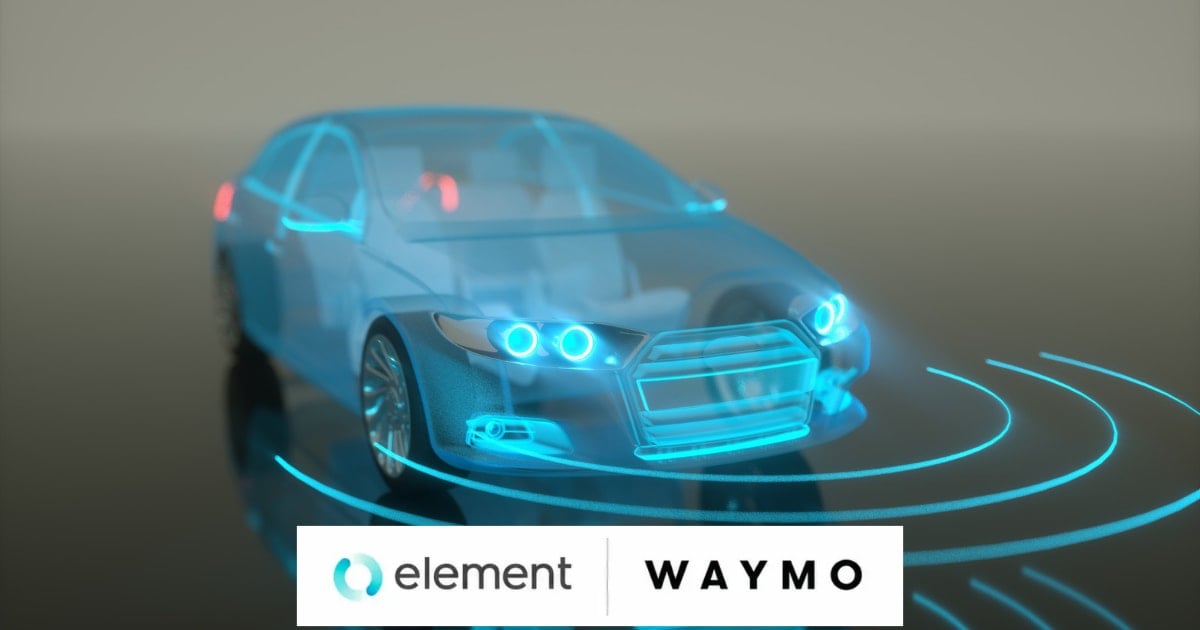
Element Expands Waymo Partnership to Support Toronto Robotaxi Fleet

Element Fleet Management is expanding its partnership with Waymo to support the autonomous vehicle company’s planned launch in Toronto, marking Waymo’s first market in Canada.

The Toronto expansion, with passenger service targeted for 2028, builds on a multi-year partnership announced in June 2026, when Element began supporting Waymo’s autonomous mobility operations in San Diego.

Through its Element Mobility division, the fleet management company will oversee onsite operations for Waymo’s Toronto fleet, including vehicle maintenance, charging, infrastructure, and fleet readiness.

Managing the Operations Behind Autonomous Fleets

Element will coordinate the personnel, facilities, infrastructure, and vehicle operations needed to support Waymo’s fleet.

Its responsibilities will include fleet lifecycle management, vehicle readiness, maintenance, charging infrastructure, energy management, and connected vehicle data.

Element will also help manage routine operational requirements to keep vehicles charged, cleaned, maintained, and ready for deployment.

The arrangement reflects the operational requirements of autonomous mobility services, where vehicles must be maintained and positioned for service even without a human driver handling daily vehicle responsibilities.

For fleet managers, the partnership illustrates how established fleet management functions, including preventive maintenance, vehicle utilization, charging coordination, and downtime management, remain central to autonomous vehicle operations.

Preparing for Toronto Operations

Waymo plans to begin its Toronto rollout with manually driven vehicles gathering mapping data and evaluating local road conditions before progressing through autonomous testing.

The company is targeting its first public riders in 2028.

Waymo and Element expect to support hundreds of jobs over time across fleet maintenance, validation driving, customer service, and other operational functions.

We asked Avinder Buttar, senior vice president and head of electrification for Element Fleet Management, about primary operational, regulatory, or infrastructure gaps that need to be bridged:

“One of the biggest shifts as autonomous mobility scales is moving beyond managing individual vehicles to coordinating an entire operating ecosystem. That means bringing together maintenance and readiness, charging and energy management, compliance and connected intelligence to keep fleets running reliably and efficiently,” he said. “These capabilities aren’t new to fleet management. What’s different is the level of scale and coordination autonomous operations require: keeping every vehicle cleaned, charged, maintained, and ready-to-operate, while minimizing downtime and maximizing availability. Autonomous mobility depends on more than the technology driving the vehicle.”

The companies have not announced how many vehicles they plan for the Toronto fleet.

The expansion extends Element’s role in autonomous mobility beyond its existing work with Waymo in San Diego, adding another market in which the company will provide the operational infrastructure supporting driverless transportation.

Chevrolet Updates 2027 Trax and Trailblazer with More Standard Safety Features

What’s Next for Fleet? Safety, AI & Industry Recognition | AF News Recap

Could your company’s workplace culture actually be encouraging distracted driving?

Most fleet operations have policies addressing phone use and other distractions behind the wheel. But a written policy doesn’t necessarily reflect what employees experience on the road.

In a conversation with Automotive Fleet, Jacy Good and Steve Johnson, co-founders of the distracted-driving awareness organization Hang Up and Drive, explained how workplace expectations can unintentionally encourage risky behavior.

We’re also looking ahead at what could shape the next era of fleet management.

Inspiration Fleet founder and CEO Josh Green discussed how electric vehicles, artificial intelligence, and autonomous driving technology could change fleet operations in the years ahead.

While electrification continues to develop across different fleet applications, Green emphasized the importance of matching vehicles and charging infrastructure to operational needs rather than treating EV adoption as a one-size-fits-all solution.

AI represents another area of change. AI tools are already helping organizations analyze large amounts of fleet data, identify trends, and generate reports more quickly. Green expects those capabilities to expand as fleet technology platforms become more connected.

He also identified autonomous vehicles as a potentially significant development for commercial fleets. In his view, autonomous technology could eventually change how vehicles travel between employee homes, company facilities, charging locations, and jobsites.

The larger takeaway is that fleet managers may need to reconsider longstanding procurement processes, technology partnerships, and operational strategies as new capabilities become available.

And finally, what does it actually take to win a fleet industry award?

The first step is documenting results. Rather than simply stating that a fleet reduced expenses or improved safety, successful nominations explain the challenge, describe the actions taken, and quantify the outcome.

That might mean demonstrating cost savings, reductions in preventable crashes, improved maintenance compliance, or measurable gains in productivity.

The advice is to start documenting achievements throughout the year instead of waiting until nomination season.

Whether it’s creating a workplace where drivers feel comfortable disconnecting, evaluating emerging technology, or demonstrating measurable business impact, fleet managers have an important role in shaping what comes next.

Make sure you hit that like button and subscribe so you don’t miss future Weekly Cheat Sheet updates and the latest fleet industry news!

Related: The Future of Fleet + What’s Changing Right Now | AF News Recap | Automotive Fleet

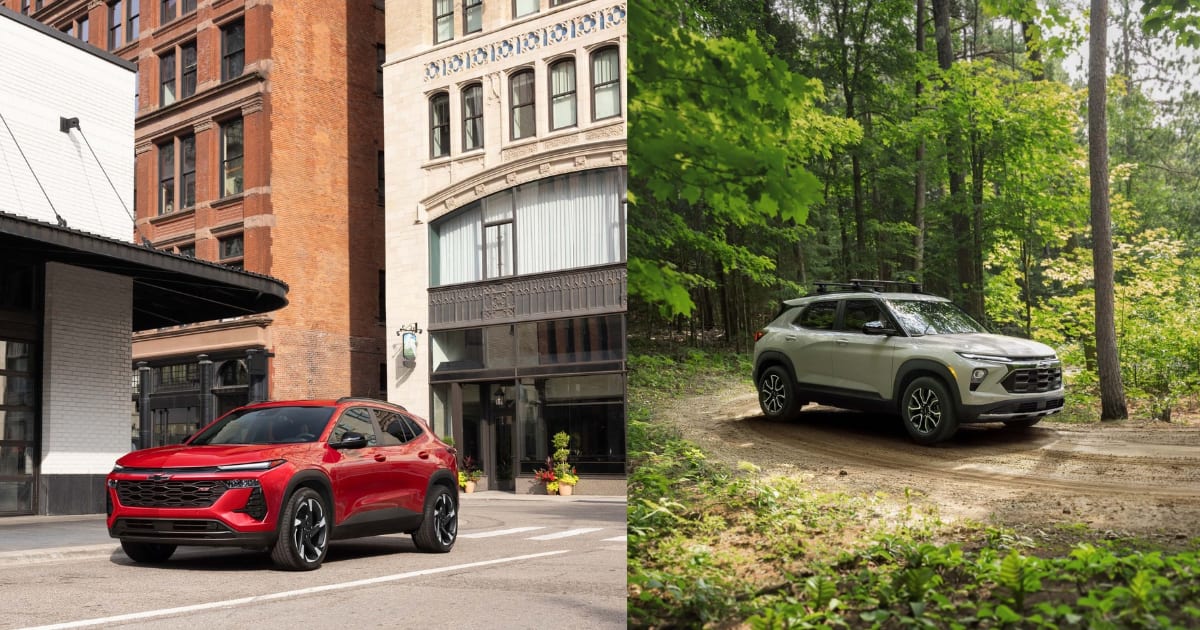
Chevrolet Updates 2027 Trax and Trailblazer with More Standard Safety Features

Chevrolet has announced updates to the 2027 Trax and Trailblazer, adding standard safety and driver assistance features, revised technology, and new trim configurations.

Both compact SUVs receive an upgraded electrical and software architecture that supports more than 20 standard safety and driver assistance features. The vehicles will be available to order beginning in February 2027.

Expanded Standard Safety Equipment

The 2027 Trax and Trailblazer add several standard driver assistance technologies, including:

  • Reverse Automatic Braking
  • Safety Alert Seat
  • Side Bicyclist Alert
  • Rear Cross Traffic Braking
  • Front Park Assist
  • Rear Seat Belt Indicator
  • Intersection Automatic Emergency Braking

Adaptive Cruise Control and Blind Zone Steering Assist are also standard safety and driver-assistance features.

For commercial fleets using compact SUVs as employee-assigned vehicles, the expanded standard equipment could reduce the need to select additional safety packages when configuring vehicles.

The 2027 Chevrolet Trax RS features a driver-focused cabin with a digital instrument display, centrally mounted touchscreen, and physical climate controls, offering drivers access to key vehicle information and functions.

Updated Technology and Interior Features

Both models receive an updated infotainment system with Google built-in and Gemini compatibility.

The new interface includes an 11-inch digital driver information center and an 11.3-inch infotainment touchscreen.

Chevrolet is also introducing OnStar One, with a 12-month included subscription. The service package includes features such as in-vehicle Wi-Fi hotspot capability and other connected services, subject to service availability and plan requirements.

Both vehicles receive interior design changes, including a new Storm Sky Gray color option.

Changes to the 2027 Trax

The Trax receives a redesigned grille, new wheel designs, LED taillamps, and an updated liftgate.

A power liftgate will be available for the first time.

Chevrolet has also simplified the Trax lineup to three configurations: an entry-level model, RS, and ACTIV.

The RS includes 19-inch wheels, while the ACTIV features a different front-end design.

The 2027 Chevrolet Trailblazer Z71 features a redesigned center console with more storage, while orange interior accents distinguish the new trim. The updated cabin also includes a column-mounted shifter, freeing up space between the front seats.

Trailblazer Adds Z71 Configuration

The 2027 Trailblazer lineup will consist of an entry-level model, RS, and the new Z71.

The Z71 comes standard with all-wheel drive, an off-road-tuned suspension, an underbody skid plate, and sport-terrain tires.

This configuration gives fleets a smaller SUV option that can operate on unpaved roads or in changing road conditions.

Inside, the Trailblazer receives a column-mounted shifter and redesigned center console. The updated layout provides additional storage flexibility and accommodates new rear passenger HVAC vents.

An AutoSense power liftgate will also be available.

Ordering and Availability

Chevrolet said the 2027 Trax and Trailblazer will be available to order in February 2027.

Pricing for the updated models was not announced.

How to Handle Vehicle Offboarding

2027 Toyota Camry Offers Hybrid Powertrain Across Five Grades

The 2027 Toyota Camry is a carryover with new pricing.

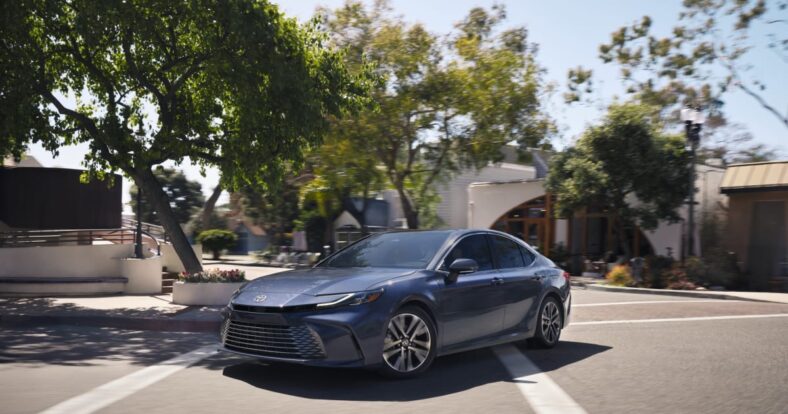
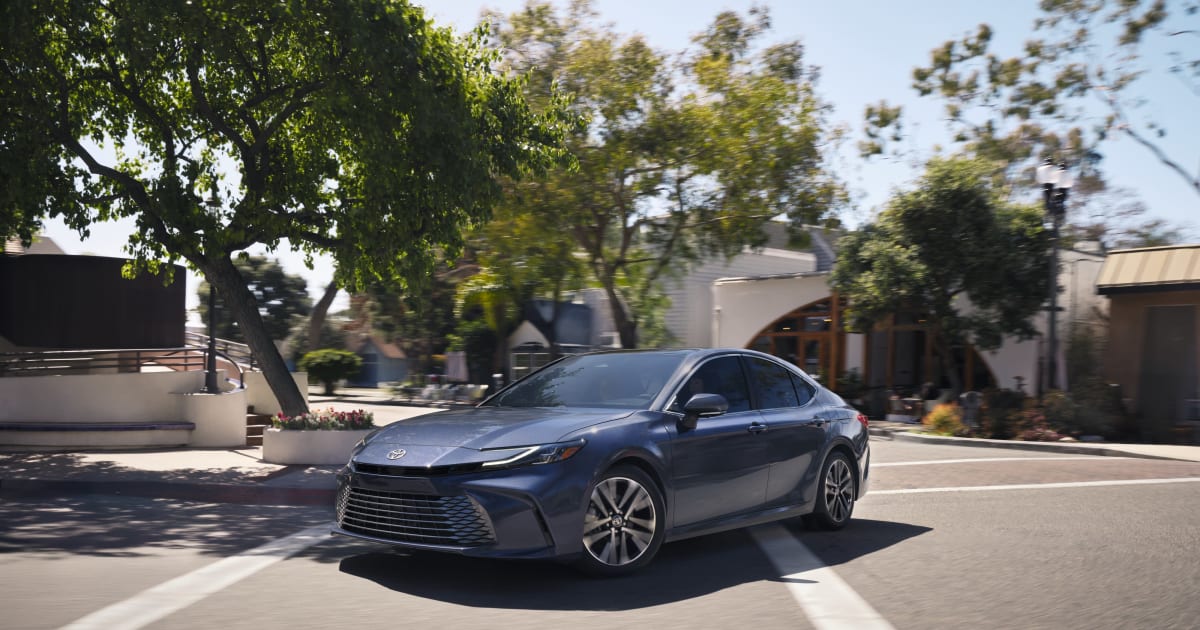
The Toyota Camry returns for 2027 with an exclusively hybrid powertrain and five available grades.

Available in LE, SE, Nightshade, XLE and XSE grades, the 2027 Camry offers Front-Wheel Drive or Electronic On-Demand All-Wheel Drive across the lineup.

The 2027 Toyota Camry is expected to arrive at Toyota dealerships this fall. The manufacturer’s suggested retail price, excluding dealer processing and handling, starts at $29,700.

Toyota Hybrid System

The Toyota Camry is exclusively hybrid, pairing the fifth-generation Toyota Hybrid System (THS 5) with a 2.5-liter, 4-cylinder engine. The powertrain produces 225 net-combined horsepower on FWD models and 232 net-combined horsepower on AWD-equipped models. The LE FWD has a manufacturer-estimated 51 MPG combined rating.

THS 5 is designed to synchronize acceleration with engine speed. Power from the lithium-ion traction battery works through the electric motor generator to support acceleration and fuel efficiency.

Camry also features an electronically controlled Continuously Variable Transmission (eCVT), which adjusts the transmission ratio based on driver throttle input.

Electronic On-Demand All-Wheel Drive

Electronic On-Demand All-Wheel Drive is available across all five Camry grades. Designed to work with THS 5, the system uses an electric motor generator on the rear axle and delivers 232 net-combined horsepower.

The system provides on-demand front-rear torque distribution based on driving conditions to support acceleration, handling and stability. When the system detects slippery road conditions or a loss of tire grip, it can control torque distribution to the rear wheels to provide additional traction.

Ride and Handling

The Camry pairs its hybrid powertrain with a MacPherson strut front suspension and multi-link rear suspension across all models.

SE, Nightshade and XSE grades add a sport-tuned suspension with specially tuned shock absorbers and springs.

An Electronically Controlled Braking system with integrated regenerative braking helps manage braking performance.

Camry also features standard selectable NORMAL, ECO and SPORT driving modes.

Camry Exterior Design

Designed by CALTY’s Newport Beach, California, and Ann Arbor, Michigan, studios, the ninth-generation Camry features Toyota’s hammerhead front design. LED headlights and daytime running lights come standard across the lineup.

The LE features a black horizontal-bar front grille and 16-inch alloy wheels, while the XLE adds a dark metallic gray grille, 18-inch black and machine-finished alloy wheels and chrome-finished exterior accents.

The SE and XSE feature sport-mesh front grilles, side sport rockers and black exterior accents. Front-side air ducts, canards, a rear spoiler and diffuser are also included. Both grades feature exposed dual-tip exhaust. The SE has 18-inch black-finished alloy wheels, while the XSE comes equipped with 19-inch black and smoke gray-finished alloy wheels.

Exterior color choices include Ocean Gem, Heavy Metal, Ice Cap, Wind Chill Pearl, Celestial Silver Metallic, Underground, Midnight Black Metallic, Supersonic Red, Reservoir Blue and Dark Cosmos, with color availability varying by grade.

The Nightshade grade is available in Ice Cap, Supersonic Red and Midnight Black Metallic. XSE also offers select colors paired with a Midnight Black Metallic roof for a two-tone appearance.

Cabin Details

The SE and Nightshade grades feature SofTex-trimmed seats with white accents, while the XSE comes standard with a leather-trimmed interior featuring “shooting blade” patterned perforations on the seating surfaces and side door trim. The SE, Nightshade and XSE also feature standard aluminum sport pedals, a leather-wrapped steering wheel with paddle shifters and a leather-wrapped shift knob.

The LE features woven fabric seating and interior trim with an embossed pattern. The XLE elevates the cabin with a combination of leather and Dinamica microfiber-trim, including quilted Dinamica trim on the front door panels and dashboard.

Heated front seats are standard on XLE and XSE and available on select other grades, while front ventilated seats are available on XLE and XSE. XLE and XSE also feature standard 8-way power-adjustable driver and front passenger seats.

Front-side acoustic laminated glass is standard on XLE and XSE to help reduce wind noise and harshness.

Across the lineup, Camry comes standard with Push Button Start and dual-zone automatic climate control with rear air vents. XLE and XSE offer additional available convenience features, including driver memory settings and a power tilt-and-slide panoramic roof with a power-retractable sunshade.

Multimedia and Connectivity

Wireless Apple CarPlay and Android Auto compatibility are standard across all grades.

Qi-compatible wireless smartphone charging comes standard, along with five USB ports throughout the cabin to help keep devices connected and charged.

The 2027 Camry comes standard with an 8-inch touchscreen equipped with the Toyota Audio Multimedia system, with a 12.3-inch touchscreen available on select grades.

Complementing the multimedia screens, a 7-inch digital gauge cluster comes standard on LE, SE and Nightshade, while XLE and XSE feature a standard 12.3-inch digital gauge cluster. XLE and XSE also offer an available 10-inch Head-Up Display.

The Camry audio system includes six speakers standard, while XLE and XSE offer an available nine-speaker JBL® Premium Audio system.

Five-year trials of Connected Services are included for Safety Connect, Service Connect and Remote Connect, as well as a 30-day/3 GB trial for Wi-Fi Connect. Additional services, such as Drive Connect, may be available depending on grade. Visit Toyota Connected Services to learn more.

Digital Key is available on XLE and XSE grades equipped with a Premium or Premium Plus Package and an active Remote Connect trial or subscription. Through the Toyota app, Digital Key allows compatible smartphones to be used for functions such as passive entry and vehicle start.

Safety and Convenience

The 2027 Toyota Camry comes standard with Toyota Safety Sense 3.0. The suite includes:

  • Pre-Collision System with Pedestrian Detection
  • Full-Speed Range Dynamic Radar Cruise Control
  • Lane Departure Alert with Steering Assist
  • Lane Tracing Assist
  • Road Sign Assist
  • Automatic High Beams
  • Proactive Driving Assist

Additional standard features include:

  • Blind Spot Monitor with Rear Cross-Traffic Alert
  • Safe Exit Alert

The Toyota Camry also comes with ToyotaCare, a plan covering normal factory-scheduled maintenance, for one year or 10,000 miles, whichever comes first, and three years of Roadside Assistance, regardless of mileage.

Related: 2025 Fleet Car of the Year: Toyota Camry

Inspiration Fleet Introduces Garage 2.0 Fleet Intelligence Platform

Inspiration Fleet has introduced Garage 2.0, an AI-based fleet intelligence platform that consolidates data from multiple fleet systems into a single environment.

The platform is designed to ingest and normalize data from different sources, including vehicle, telematics, fuel, energy, and operational systems. Fleet managers can then access that information through real-time KPIs and role-based dashboards.

“With more data available than ever before, fleet operators don’t have a data availability problem; they have a fragmentation problem,” said Chris Getner, chief technology officer at Inspiration Fleet.

Connecting Data Across Fleet Operations

Garage 2.0 can also integrate fleet information with enterprise systems outside the traditional fleet department, including finance, sustainability, and facilities.

That capability is intended to allow fleet data to flow into broader organizational decision-making rather than remaining within individual fleet or vendor platforms.

The system is designed to support fleets operating multiple powertrain technologies, including internal combustion engine, hybrid-electric, and battery-electric vehicles. Inspiration Fleet said the platform can also incorporate data associated with non-vehicle assets, services, technology vendors, and EV charging infrastructure.

One of the platform’s central features is a vendor-agnostic architecture. Rather than requiring fleets to use a predetermined group of technology providers, Inspiration Fleet said Garage 2.0 lets customers select vendors and switch providers without migrating the entire fleet management platform.

That could be especially relevant as fleets add new technologies or replace individual systems without rebuilding the connections between their fleet data and the rest of the organization.

“Every fleet is unique,” said Josh Green, CEO of Inspiration Fleet. “With Garage 2.0, each customer’s fleet management platform is finally customized to their needs.”

The company said the platform is designed to create a customized fleet management ecosystem around each customer’s combination of vehicles, vendors, systems, and operational requirements.

Fuel Prices Surge in September | September Fuel Update

GeoFencing Adds to Your Truck Security Arsenal

Geofencing is a familiar fleet tool today, but its early adoption marked a major shift in vehicle tracking, route monitoring, and the debate over employee privacy.

Editor’s Note: This article was originally published when geofencing was still an emerging fleet technology. It has been updated to provide historical context while preserving examples that illustrate how fleets first approached GPS tracking, vehicle security, route monitoring, and employee privacy.

Fleet tracking technology has changed considerably since geofencing first began making its way into commercial fleet operations. What is now a familiar feature of many telematics and fleet management platforms was once an emerging tool that promised to give fleet managers something they had never had before: an automated way to know when a vehicle entered or left a defined geographic area.

Looking back at the technology’s early fleet applications provides some useful perspective on how vehicle tracking evolved and why many of the same questions surrounding security, productivity, and employee privacy remain relevant.

Early Concerns About Vehicle Location

Vehicle security and unauthorized use were among the early arguments for better fleet tracking. Companies had significant investments in both their vehicles and the employees operating them. Knowing where those assets were located could potentially help protect vehicles and their contents while also giving managers greater visibility into how company vehicles were being used.

Before today’s connected-vehicle and telematics systems became commonplace, fleets had far fewer ways to maintain that visibility.

Cell phones were one of the tools available. By the mid-2000s, GPS capabilities were increasingly being incorporated into mobile phones, in part because of federal requirements surrounding the location of emergency 911 calls.

But those early capabilities were a long way from the location data fleet managers can access through modern telematics platforms.

Geofencing Emerges as a Fleet Tool

Against that backdrop, geofencing began attracting attention as another way fleets could use GPS technology.

A geofence creates a virtual boundary around a geographic area. Early systems could identify when a tracking device or vehicle entered or exited that predefined area and, depending on the system, send an alert when the boundary was crossed.

For fleets, the possibilities extended beyond simply locating a truck. Geofencing could be used to identify route deviations, establish restricted areas, monitor arrivals and departures, and potentially improve fuel and operational efficiency.

Those capabilities may sound routine today, but they represented a significant change in how fleets could monitor vehicles at the time.

Maptuit, one of the companies providing geofencing services during this period, described a system that allowed customers to define named geographic regions using geocoded points and manually created boundaries. Those regions could then be used to determine whether a vehicle or device was inside or outside a designated area.

The company also offered integration with Google Earth, allowing users to draw geofence boundaries over satellite imagery.

AeroAstro, another early provider of GPS location and geofencing technology, promoted the ability to establish boundaries around normal fleet operations. Crossing those boundaries could trigger alerts and other fleet management functions.

The company saw potential applications ranging from identifying route deviations to managing vehicles crossing state or other geographic boundaries.

Truck Manufacturers Saw the Potential

Vehicle manufacturers and commercial truck companies were also beginning to incorporate GPS-based fleet management capabilities.

International Truck and Engine described geofencing as a way for fleets to establish virtual geographic areas around approved routes.

If a vehicle crossed a designated boundary, the system could provide a notification that included the time, date, and location. Fleets could also establish what were sometimes called reverse geofences, which generated alerts when vehicles entered restricted areas rather than when they left an approved one.

At the time, International pointed to applications involving safety and hazardous materials, where certain vehicles might need to avoid particular locations.

The underlying idea was straightforward: Give fleet managers greater visibility into where vehicles were operating without requiring someone to continuously monitor every truck.

The Employee Privacy Question Was Already There

Even during geofencing’s early adoption, however, the technology raised questions about employee monitoring and privacy.

Some employers viewed location tracking as a way to reduce unauthorized vehicle use and improve productivity. Critics worried that increasingly precise tracking could cross the line from managing company assets into unnecessarily monitoring employees.

Writing in InfoWorld at the time, Ephraim Schwartz questioned whether employers could undermine trust by treating workers much like assets whose movements needed to be controlled.

His argument reflected a debate that would become increasingly important as GPS tracking, telematics, connected vehicles, and eventually mobile workforce technology became more sophisticated.

The technology has advanced considerably since those early discussions, but the underlying management challenge has not disappeared.

Fleet managers have more tools than ever to understand where vehicles are, where they have been, and how they are being used. Establishing clear policies about why that information is collected, how it is used, and what employees should expect remains an important part of deploying those tools responsibly.

From Emerging Technology to Everyday Fleet Tool

What once required specialized GPS services is now commonly incorporated into telematics and fleet management platforms.

Modern fleets can use geofences for far more than identifying unauthorized trips. Depending on the platform and operation, geographic boundaries can help automate arrival and departure records, verify service activity, monitor yard movements, support dispatching, identify route exceptions, and provide location-based operational data.

That makes early discussions about geofencing an interesting marker in fleet technology’s evolution.

The terminology and capabilities have changed, but one of the original questions remains remarkably familiar: How can a fleet use better vehicle visibility to improve operations without losing sight of the people behind the wheel?

Does Your Fleet’s Culture Encourage Distracted Driving?

What happens when the people responsible for enforcing safety rules are the ones setting the wrong example? The answer may reveal why some of the biggest risks to fleet drivers have little to do with what’s written in the employee handbook.

Distracted-driving policies are standard in many fleet safety programs, but having a policy in place doesn’t necessarily mean drivers follow it. From pressure to remain productive to supervisors who fail to lead by example, workplace expectations can sometimes undermine the very rules designed to keep drivers safe.

For Jacy Good and Steve Johnson, co-founders of the distracted-driving awareness organization Hang Up and Drive, the issue is deeply personal. Good lost both of her parents and was left partially paralyzed in a crash caused by a distracted driver. The pair have since dedicated their work to educating drivers about the consequences of distraction, delivering nearly 2,000 presentations over 16 years.

In this Q&A with Automotive Fleet, Good and Johnson discuss why distracted-driving policies fall short, the hidden risks of hands-free conversations, and how fleet managers can build a safety culture that encourages drivers to disconnect behind the wheel.

This interview has been edited for length and clarity.

Q: Many fleets already have distracted-driving policies in place, so why are drivers still choosing to answer calls, check messages, or multitask behind the wheel? What are policies failing to address?

Good & Johnson: Unfortunately, distracted driving is an issue that is hard to really appreciate until it touches you – it was simply not on our radar until the crash that upended our lives and, objectively, we can understand that this is how it is out there.

So many people have driven distracted hundreds of times and gotten away with it, so it’s easy to feel like a safe driver immune to this threat, even though the risk of causing devastation rises enormously every time it’s done. Professionals often believe that they need to (attempt to) multitask to keep up.

We think it is vitally important that employers help drivers understand the human factor behind their policies. Look me in the eyes and tell me what on your phone is more important than my parents’ lives or the use of half my body. The right on-site speaker or video can do the trick.

It’s not easy, but the stakes are too high not to work to get drivers to want to follow the policy, not just do it because of possible repercussions at work.

Q:Work-related calls can feel productive or necessary, particularly for employees who spend much of their day on the road. How can fleets challenge the idea that drivers should use windshield time to stay connected without making employees feel less productive?

Good & Johnson: One of the strongest arguments for unplugging behind the wheel comes from companies that enact cell phone bans for their drivers. Since our brains don’t truly multitask but rather toggle-task – bouncing attention between all the things we’re trying to do at one time – when we start doing just one thing at a time, we do a better, more efficient job at each thing we are trying to accomplish. When policies are in place and followed, companies and workers record increased productivity, so there’s a business case.

Ultimately, though, drivers will need to believe in their power to both harm and help the people they share the road with. One badly timed moment of unnecessary distraction can cause irreparable harm.

Q:Hands-free technology is often treated as the solution to phone distraction. What does the research on cognitive distraction tell us about the difference between having your hands free and actually having your attention on the road?

Good & Johnson: My crash was caused by a driver having a hands-free phone conversation. He was “there” enough to stop at the red light he came to, but not “there” enough to stay stopped. His left turn through that light killed my parents and left me paralyzed. I’m sure he thought he was doing the right thing with his phone in his lap, looking forward, and with his hands on the wheel.

Research has repeatedly shown that a hands-free phone conversation is a significant danger on par with driving at a .08 BAC (Blood Alcohol Concentration). It’s that simple.

Hands-free sounds safe on the surface, but the cognitive distraction of a phone call is far more significant than it feels, and it’s not because of what we’re doing with our hands.

Q: Not every conversation creates the same level of distraction. What kinds of conversations or mental demands are most likely to pull a driver’s attention away from driving, and how should fleets account for those less visible risks?

Good & Johnson: It’s been proven with scans that a conversation with someone outside a person’s line of sight is about 50% more taxing on our brains than in-person – this is what makes the phone particularly dangerous behind the wheel. This extra cognitive demand decreases reaction time and one’s ability to assess what is going on around them.

That said, information about the driving task can ultimately increase safety when used properly. Policies at companies not yet ready to go with a 100% ban should specify that any phone conversation must be work-related and short, such as a rerouting to a new job, information about road or weather conditions, things that, if done quickly and within guidelines, may prove better than leaving a driver unprepared for something coming down the literal or figurative road.

Q: If a fleet manager wants to know whether their organization is unintentionally encouraging distracted driving, what behaviors or warning signs should they look for among supervisors, dispatchers, and drivers?

Good & Johnson: More than once after we’ve done a Hang Up and Drive presentation for drivers, we’ve had someone come up to us and say a version of, “Why should I follow the policy when I see my boss get into the car after work and immediately pick up the phone driving out of the lot?”

We have no great response to that, because he’s right. These policies need to apply top to bottom, and supervisors need to model what they’re asking of their drivers on and off company time. When supervisors, dispatchers, and drivers make quantity and speed the be-all, end-all goal, then you start to see corners cut, and it escalates fast.

A gas company in the Midwest hired us for seven speeches in several states, and before each one the safety lead told the story of their most recent company fatality, caused by a driver finishing the paperwork for the previous job while driving to the next.

Maybe every driver does it, and each time they think they’re saving 10 minutes. Maybe they believe they’re saving themselves and the company time. But one bad crash undoes all of that and so much more – loss of life, the cost of a vehicle, insurance, lawsuits, reputational cost, etc. As kids say these days, the math doesn’t math.

Jobs completed faster than expected might be a warning sign rather than an indication of a praiseworthy, efficient employee.

Q: How can fleets move distracted-driving training beyond annual reminders and statistics and actually change habits among employees who may have been using their phones while driving for years?

Good & Johnson: Tying the action to something that hits a driver’s heart is most likely to change behavior. A photo of a driver’s spouse, kid, or dog on the wheel or dash is enough for some people. In a video that’s part of our presentation, Jacy says, “I didn’t have my daddy to walk me down the aisle when I got married,” and we’ve seen many a burly man shed a tear in a room with fellow drivers because they imagine it will be one of the most meaningful moments of their own future.

A monthly check-in, having drivers state what and who they’re driving safely for, management that leads by example – it all changes the culture. We wish everyone would be perfect about this, but we meet people where they are, and we must accept incremental change as okay if it’s moving the needle in the right direction.

A driver with decades of experience and heavy phone use may not be willing to go cold turkey, but even getting someone to vow to only have a hands-free call on an open multilane highway on a day with good visibility, never in downtown or in the rain, for example…it adds up.

Q:If a fleet manager realizes there’s a gap between the company’s written policy and what employees experience on the road, what are the first three changes you would recommend making to create a genuinely distraction-free driving culture?

Good & Johnson: Companies that can afford monitoring should probably do it. We’ve seen drivers go from hating it to tolerating it to not minding it, and we’ve met several who were exonerated in crashes because of it.

Second, the policy could increase repercussions for violations. Typically, the more dangerous the workplace, the stricter the policy; mining companies, oil and gas, construction, etc., have policies that lead to termination after one offense. But if supervisors believe in the danger that science proves true, and they believe that a crash caused by something so preventable is unacceptable, then why not put teeth to the policy in line with that reality?

Finally, we come back to it every time; it’s about making people care. There is no shortage of speakers, videos, and heart-wrenching stories out there that can shape how a person thinks about distracted driving. Don’t wait for a crash to impact your life to care about this issue. The stakes are too high, and too permanent. We’ve devoted 16 years, nearly 2,000 events so far, to getting people to want to follow the laws and the policies. It’s a fight against human nature, but it’s winnable with the right approach.

How to Handle Vehicle Offboarding

What Will Shape the Next Era of Fleet Management?

Over the last 20 years, the fleet industry has experienced massive changes: GPS tracking, video telematics, predictive maintenance, connected vehicles, electric vehicles, and now, the advent of artificial intelligence (AI).

If these changes have felt like a whirlwind, the next era of fleet will feel like a hurricane if fleets aren’t prepared.

Josh Green is the Founder and CEO of Inspiration Fleet, the first “eFMC®,” built from the ground up to help fleets evolve so they can prepare for and thrive in this new operating environment. In our recent conversation, he discussed some of the innovations shaping the fleet world and let us in on what the next era of fleet holds and how fleets can take advantage.

Electric Vehicles

Electric vehicles certainly aren’t new, but they also have yet to be adopted wholeheartedly by fleets. Although fleets have successfully integrated EVs into their lineup, the industry as a whole has seen fits and starts over the last quarter century. Green, however, says widespread use is coming soon.

“EVs will be the solution for most fleets in the future,” said Green. “Today, EVs are still thought of as new, even risky, technology, even though there’s ample data that EVs outperform their fossil fuel counterparts when fleets get implementation right. I don’t know whether it will be three years, five, or 10, but we’re rapidly approaching the tipping point, after which people will look at you like you have horns growing out of your head if you drive an ICE vehicle because you’re using yesterday’s or the last century’s technology.”

Green acknowledges that EVs aren’t a silver bullet — fleets should only move forward when and where they have the right vehicle for a given use-case paired with the right charging solution. His advice: If now isn’t the right time, fleets should still be thinking ahead five or 10 years from now — and that means at least dipping their toes in the water with well-designed EV pilots in the applications that clearly work today. That experience will be invaluable as EVs go mainstream in the coming years.

“One of the biggest barriers to more widespread EV adoption by fleets has been the rigidity of corporate procurement processes. Time and time again we see companies running RFPs using templates developed years, if not decades, ago. Increasingly, we’re being asked to come in and help rethink and update RFPs for the modern era,” he explained. “They’re using the same RFP questions they’ve been using for 20 or 30 years, often missing critical areas like change management and operational support, the range of charging options provided, how to assess which vehicles are ready to transition, and EV pilot design and implementation.”

Artificial Intelligence

Although AI has been around for a few years, we have only just begun to understand what it can do and how it will change fleet management.

In its current state, AI is helping ease data overload by excavating insights from massive data sets quickly and with little human intervention.

“What used to take an analyst multiple days to run a report can now be done in 15 minutes in the background,” Green said.

Beyond data analysis, Green says the next step in the AI revolution will be faster solution identification and new-product rollouts by fleet partners.

“We can use AI to develop new products and services and launch the exact solution our customers want much faster than in the past,” Green stated. “And that means being responsive to specific customer requests and giving them the analysis they want — everything from dashboards to reporting to trend analysis to scenario planning — and enabling them to make better-informed customer decisions. The combination of AI and large, connected data pools can be really powerful.”

Autonomous Vehicles

Although fleets have dipped their toes in EV and AI waters, they have yet to explore autonomous vehicles (AVs).

“The most disruptive development on the horizon is the rapid emergence of AVs,” Green said. “The transformative nature of autonomous vehicles is currently being underestimated, but they are going to be increasingly important for commercial fleets.”

Green envisions AVs supporting fleet applications that currently involve a lot of back-and-forth trips and coordination between employee homes, company offices or depots, and worksites. Add EVs to that mix, and now a charging location needs to be added to the mix. AVs add a completely new element. Instead of being stationed at a company depot or an employee home, AVs could be parked overnight at a secure and affordable third party charging facility, pass by the company depot in the morning to pick up supplies, and meet the employee at the worksite.

“Having the ability to unshackle all these nodes in the daily network — where the worker lives, where the vehicle “sleeps,” where it picks up daily supplies, and where work is performed — will be much more efficient, leading to productivity gains and large savings in terms of labor costs, fuel (electricity), and fleet spend,” Green said. “The best performing companies years from now will have begun planning for that future today.”

The New FMC Model

Fleets need to evolve. And Green said the fleet management company (FMC) model is changing, too. Whereas legacy FMCs have long-standing business models and vendor partnerships that usually lock customers in to using those specific partners, whether for telematics, maintenance, roadside assistance, or something else, fleets today benefit from working with an eFMC® that is vendor agnostic.

“Our customers have expressed a desire to be unshackled from technology lock-in, free to adopt whichever new, better point solutions best fit their fleet.” he said. “What was best of breed 15 or 20 years ago that legacy FMCs built their platforms around may well not be the best choice today. There are new telematics players, there are new safety monitoring and camera players, there’s a lot of innovation. Our agnostic, open-architecture platform allows people to select their vendor of choice and integrate the data. The biggest advantage is that we’re unencumbered by decisions that were made in a different era.”

And fleets aren’t the only one evolving. Green has seen his own business, Inspiration Fleet, evolve over the last five years.

At inception, Inspiration Fleet’s eFMC® model focused solely on EVs, helping fleets simplify and accelerate the transition to electric transportation. But as fleet customers benefited from the company’s strategic engagement model, AI-powered tech platform, and white-glove customer service, they began asking Inspiration Fleet to manage their ICE vehicles, too.

“If the customer pain point is X, the industry has always solved it with Y. Today, is that really the best way to solve that problem?” Green asked. “The real value in having an eFMC® is the planning and strategy for how to evolve your fleet in a world of rapidly changing technologies and rapidly emerging vendors with new and better offerings.”

How To Prepare For The Next Era Of Fleet

Ultimately, Green says fleet managers who want to successfully navigate the next era of fleet will be more strategic than tactical, more proactive than reactive.

“The biggest limiter is settling for ‘we’ve always done it this way,’” Green said. “It takes guts, creativity, and imagination to question the status quo, but taking a step back and demanding more from your current provider, or, better yet, working with a company designed for this era, that is nimbler and more future forward, can yield a lot of benefits.”

To learn more about what will shape the next era of fleet management, click here.

This article reflects the views of Inspiration Mobility and does not necessarily represent the views of Automotive Fleet or Bobit Business Media.

Fleet Meets: Brett Bridges | Automotive Fleet

One of the best parts of the industry, as most involved would agree, is the people.

In an industry like fleet, it’s easy to get lost in all of the tech, numbers, and operations. We forget to stop and admire those who keep it all running.

The Fleet Meets series attempts to eradicate that and get to know the humans behind it.

In this edition, meet Brett Ashley Bridges of BBL Fleet. She has more than 15 years of experience in project management and is currently the vice president of communications and client services. Automotive Fleet connected with Bridges on her career, AFLA, advice, and what animal she’d be if she had to choose.

Yes, that’s right. And her answer to that one was gold.

Looking back at when you first entered the fleet industry, what did you think your career would look like and how does that compare with where you are today?

Bridges: When I first entered the fleet industry, I didn’t have a clear picture of what my trajectory would look like, and I expected my path to be focused primarily on learning the sales and services side of the business. My goal was simply to dive in and become as knowledgeable as I could.

As my career progressed, I came to understand BBL Fleet’s approach to fleet management overall, the role each team member plays, and got a comprehensive understanding of the services we provide and the results driven from it all. I had opportunities to grow that I never anticipated and as I became increasingly involved, I eventually evolved from a sales and projects role up to where I am now.

Looking at where I am today, the biggest difference is that my career has become much more relationship-driven than I originally thought. While the destination is different from what I imagined when I started, it’s been far more rewarding because it combines industry expertise and meaningful connections that positively impact others.

You came into fleet without a traditional fleet background. What initially surprised you most about the industry, and what ultimately made you want to build your career in it?

Bridges: The answer is the same for both questions: the people.

Fleet came along unexpectedly, so I was starting from scratch from a technical and relationship standpoint. However, I was immediately embraced by both my team at BBL Fleet and countless members of the industry who made introductions, imparted wisdom and advice and even let me tag along until I forged my own network. (Special thanks to Pam Hackett and Debbie Struna on that last point.)

I’ve been part of different industries from nonprofits and education to banking and govcon but have never witnessed the level of comradery I have within fleet. In the past I was used to seeing competition amongst colleagues, but now I find myself in spaces where people freely exchange ideas, collaboratively solve problems and challenge for growth. That, in combination with continuous learning and ways to make my own impact, is what made fleet feel less like an industry I joined and more like a community where I wanted to grow my career.

How has your understanding of what fleet clients need changed as you’ve moved through different roles and into communications and client services?

Bridges: My understanding of fleet clients’ needs has become much stronger. From an outside perspective it’s easy to think fleet is simply about operating vehicles day-to-day, but I quickly realized it’s connected to nearly every part of a business, from safety and compliance to finance, operations, sustainability, and employee experience.

Over time, I’ve learned that clients are really looking for a strategic partner who can help them improve efficiency, control costs, support drivers, navigate change and communicate effectively. Being closer to clients has shown me that success isn’t just about providing solutions, it is about listening and understanding their challenges so we can solve problems together.

What does stepping into the vice president of communications and client services role mean to you, and what are you most excited to take on in this next chapter?

Bridges: BBL Fleet has an outstanding culture rooted in best-in-class service and innovation. In this next phase, we will continue evolving the client experience through enhanced processes and stronger partnerships that create greater alignment from onboarding through ongoing account management. Our clients are at the heart of everything we do, and I’m excited to help ensure a smooth and consistent experience throughout every stage of the relationship.

You’ve become increasingly involved with AFLA and industry leadership. How has that involvement influenced the way you approach your own career and leadership style?

Bridges: Being around AFLA members opened my eyes to what is possible career-wise because of the exposure to different organizations and the background each person comes from. Where my initial perspective started in the FMC space, I learned more about service providers, creative ways to analyze and present data and identify developing trends and topics that help me be more thoughtful and curious in my own roles. I also get to see best practices and leadership styles in various forms which allows me to take the best of the best back to my own team.

What is your biggest piece of career advice?

Bridges: Don’t be afraid to step outside your comfort zone and take on projects, even when impostor syndrome tries to kick in. This can help you build new skills, expand your network across teams and accelerate your professional growth while showing eagerness to learn and contribute,

If you could be any animal for a day, what would you choose… and why?

I’d choose a dolphin. They’re intelligent, highly collaborative and like to have fun. Dolphins remind me of the positive motives from the book Prime to Perform by Neel Doshi and Lindsay McGregor where play, purpose and potential have the biggest impact on performance and culture. And, if I was a dolphin then I would finally be able to swim!

Related: Fleet Hacks: Rethink the Job, Save the Template, Check the Data

How Fleets Can Recruit and Train Veterans for Technician Roles

Here’s how the technician shortage has affected uptime for fleets, and what to do about it.

by David Green, General Manager at Cox Fleet

October 8, 2026

Editor’s Note: This article is a contributed piece and the views and opinions expressed are those of the author and do not necessarily reflect those of Automotive Fleet or Bobit Business Media.

The technician shortage is hitting fleets where it hurts most: uptime. When shops are short-staffed, repairs take longer, preventative maintenance gets harder to schedule, and vehicles spend more time waiting instead of working. For fleets already under pressure to keep assets moving, the labor shortage has become much more than a hiring problem.

At the same time, thousands of service members transition from their military service to civilian careers each year with experience maintaining tactical vehicles, aviation systems, heavy equipment, and other mission-critical machinery. Many already know how to diagnose mechanical problems, work under pressure, follow strict safety procedures, and keep equipment ready when failure is not an option.

So why aren’t more of them entering fleet maintenance and how can fleets and maintenance service providers solve the disconnect of matching a rich talent pool and easing one of the industry’s biggest workforce challenges?

Why Military Experience Translates to the Shop

Technical experience is only part of what veterans can bring to fleet maintenance. The discipline, accountability and adaptability developed through military service can be equally valuable, particularly as fleets look not only to recruit technicians, but build a workforce that stays for the long term.

Those skills matter in a fleet environment. Technicians rarely work in isolation, their decisions affect drivers, maintenance teams, customers and ultimately whether a vehicle gets back on the road. Being able to communicate, problem-solve, take ownership of a job and work effectively with others can be just as important as knowing how to complete the repair itself.

Additionally, fleets shouldn’t necessarily limit veteran recruiting to candidates with a mechanical military background.

Some veterans may need more technical training when they enter the industry, but still bring the discipline, adaptability, and willingness to learn that can make them successful technicians. With technician demand continuing to outpace supply, looking at aptitude alongside existing experience can help fleets expand the potential talent pool.

There are signs this approach can pay off in retention, too. Data from groups like Fastport shows that veteran retention rates in apprenticeship programs reach up to 94%, pointing to the potential value of veteran recruiting beyond simply filling an immediate opening.

Bridging the Military-to-Civilian Gap

One of the biggest challenges is that military experience doesn’t always translate cleanly on paper.

Military occupational specialties may not match civilian job titles, making it difficult for hiring managers to understand how a veteran’s experience applies to an open technician position. Veterans may face the same challenge when trying to explain years of military training and responsibilities on a civilian resume.

Having recruiters who understand military culture can make the transition easier from the first conversation. Veterans often benefit from working with someone who can interpret military experience, understand the transition process, and remain a point of contact throughout recruiting and onboarding rather than handing the candidate off at each stage.

Hiring managers can get a better understanding by looking beyond the title. Ask what equipment the candidate maintained, which systems they worked on, how they diagnosed problems, what safety processes they followed, and what responsibilities they had for keeping equipment operational.

There can also be an adjustment to the civilian workplace itself. Veterans are coming from a highly structured environment with clear expectations and accountability. Civilian fleet operations still require structure, but employees typically have more flexibility and choice in how they work and build their careers.

That makes support during the transition particularly important. As we’ve seen through veteran recruiting, empathy, trust, and having someone available to help navigate that adjustment can make the transition into civilian work much smoother.

Building a Path into the Industry

Recruiting veterans is only one part of the equation. Fleets also need programs that help service members translate their existing skills and build the ones they may be missing.

The Department of Defense SkillBridge program is one example. It allows eligible transitioning service members to spend up to 180 days gaining civilian work experience before leaving the military. During that period, veterans can learn the skills and processes specific to a fleet operation while employers have an opportunity to develop potential long-term employees.

Fleets also need to consider the practical costs of entering the industry. Technicians are typically required to have their own tools, and that upfront expense can be a barrier for veterans starting a civilian career. Tool programs that cover those costs or provide tools at no cost after an employee stays for a set period can help remove that barrier and make the transition into the industry more accessible.

Training programs can also create opportunities for veterans who didn’t serve in technical roles. Through Cox Fleet’s Internal Technician Training Academy, which has graduated over 40 veteran technicians in the last 3 years, participants can learn foundational skills such as preventative maintenance and basic vehicle service, gain field experience, and continue developing their capabilities through additional training.

This approach expands the potential hiring pool. Instead of looking exclusively for someone who arrives with every technical qualification, fleets can also identify candidates who have the right foundation and invest in developing the rest.

Continuity throughout recruiting and onboarding is another important piece. Having recruiters who understand military culture and who remain involved throughout the process, gives transitioning veterans a consistent person to turn to when questions or challenges come up.

Once technicians enter the field, that development should continue through mentorship, regular check-ins, and opportunities to take on increasingly complex work.

Creating Careers, Not Just Filling Openings

Veteran hiring can also become a long-term retention strategy when employees can see where their careers can go.

Raul Zepeda was recruited out of Fort Campbell with experience as a wheeled vehicle technician. He entered Cox Fleet’s Internal Technician Training Academy, moved into an apprentice role, and progressed through multiple technician levels before becoming a senior mobile diesel tech. Over five years, he gained experience across several different roles, including invoicing and estimating, before moving into leadership. His progression also reflects the earning potential that can come with building a career in the field: senior diesel technicians earn an average of approximately $34-$40, per hour nationally.

Nicholas Brown came from a different background. He served as a medic rather than a vehicle technician, but his military experience still aligned with the skills and mindset needed to build a career within the organization. Today, he is a senior purchasing coordinator. Nationally, senior purchasing coordinators earn an average base salary of approximately $64,000 annually, according to Indeed Data.

Zepeda and Brown’s paths show why veteran hiring shouldn’t be viewed simply as a way to fill today’s technician openings. For some employees, the next step may be becoming a more advanced technician. Others may move into management, operations, purchasing, training, or another area of the business.

Building the Technician Workforce of the Future

The technician shortage isn’t likely to disappear in the near term, and neither is competition for experienced talent. Fleets need to think more broadly about where their next generation of technicians will come from.

Veteran recruiting can be one piece of that strategy alongside technical schools, apprenticeships, training programs, and other workforce partnerships. At the same time, fleets will need to continue investing in the technicians they already have as technology changes the skills required in the shop.

Diagnostics, connected vehicle technology, and AI are becoming a larger part of vehicle maintenance. Technical skills will continue to matter, but so will the ability to learn, adapt, and work with new tools.

For fleets facing an ongoing technician shortage, veterans represent a talent pool with many of those qualities already in place. Creating clearer pathways into the industry can help service members translate their experience into long-term civilian careers while giving fleets another way to build the skilled workforce they’ll need for the future.

About the Author

David Green is a General Manager for Cox Fleet, leading the Tennessee market. A seasoned trucking industry leader with more than 41 years of progressive, hands‑on leadership experience across the commercial transportation and fleet‑service sector. Beginning his career as a Preventive Maintenance and Tire Repair Technician, David built a deep technical foundation that shaped his operational expertise and leadership style as he advanced through increasingly complex management roles.

Over the course of his career, David has led large teams, managed multi-state operations, and driven disciplined financial management, strategic planning, and strong organizational development. His strengths include P&L oversight, operational analysis, inventory management, staff recruitment, and mentoring leaders to elevate performance.

Keep Reading! From Marine Corps Motor Pool to Managing 460 Fleet Vehicles

Wholesale Used-Vehicle Values Fall as Cox Automotive Cuts 2026 Forecast

The index fell to 205.9 in September, down 0.6% from a year earlier and 1.1% from August after adjustments for vehicle mix, mileage, and seasonality. Non-adjusted wholesale prices declined 1.2% year over year and 1.3% month over month.

Cox Automotive also lowered its year-end forecast, now expecting the Manheim Used Vehicle Value Index to finish 2026 up approximately 0.2% year over year, compared with the 2% increase projected in July.

“We are in the weakest season for wholesale valuations, and as September closed, depreciation was steeper than we typically see this time of year,” said Jeremy Robb, chief economist at Cox Automotive.

Fuel Costs and Interest Rates Pressure Vehicle Values

Following stronger-than-normal appreciation during the first half of 2026, wholesale values weakened in the third quarter amid higher fuel costs, rising interest rates, and broader economic pressures.

Diesel-powered vehicles accounted for just over 3% of wholesale inventory, but days’ supply climbed to 39 days, 27% higher than a year ago. Cox Automotive reported that record-high diesel prices contributed to weaker valuations.
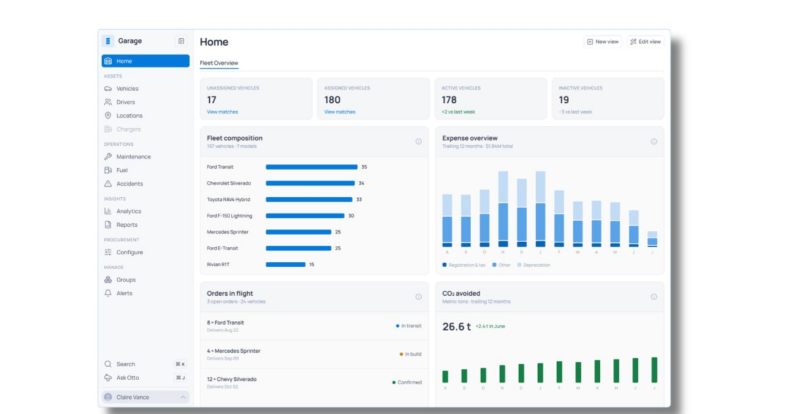
Large pickups and SUVs also experienced declining demand and values as fuel costs increased. Meanwhile, older, more affordable vehicles showed greater resilience, with smaller declines in value.
Electric vehicles moved in the opposite direction. The Manheim EV Index increased 4.3% year over year and 0.6% from August, while the non-EV index declined 1.6% year over year.
Off-Lease Supply and EV Remarketing Volumes Increase

Wholesale EV sales at Manheim increased 22% from the second quarter and 45% from a year earlier. EVs represented a record 4.9% of Manheim transactions during the third quarter, compared with 3.9% in the second quarter.

Off-lease EV supply is also increasing. EVs accounted for approximately 10% of off-lease supply during the first half of 2026 and are expected to represent about 16% during the second half, potentially reaching 19% by summer 2027.

Overall off-lease vehicle supply is recovering from its first-quarter low. Monthly volumes are increasing from approximately 190,000 units in the first half of 2026 to an estimated 220,000 units in the second half.

Cox Automotive expects the continued increase in off-lease supply to contribute to approximately 3% growth in wholesale volume in 2027.

Cox Automotive Updates Used-Vehicle Market Forecast

Cox Automotive raised its 2026 total used-vehicle sales forecast slightly to 38.5 million units, up from its previous estimate of 38.4 million. Retail used-vehicle sales are expected to reach 20.5 million units, while certified pre-owned sales are projected to total 2.6 million units, down 1.8% year over year.

Total wholesale volume is forecast at approximately 11.8 million units in 2026, an increase of less than 1% from 2025. A projected 23% increase in off-lease volume and 5% increase in rental volume are expected to be partially offset by a 3% decline in dealer-sourced units.

Looking ahead, Cox Automotive is monitoring rising interest rates, declining consumer sentiment, and fuel costs as potential pressures on wholesale values. Recovering fleet demand and an aging U.S. vehicle population could provide some support.

For additional data and analysis, see the Q3 2026 Manheim Used Vehicle Value Index Report.

Look Back: Spring Bounce Pushes Q1 Used Vehicle Values Higher

FLD Promotes Three Executives in Leadership Changes

FLD has announced three executive promotions, including the appointment of a new CEO and president, as part of a series of leadership changes that took effect Oct. 1.

The vehicle remarketing company named Ron Sanders managing partner, Gary Mott chief executive officer, and Richard Mallek president. Mallek succeeds Mott as president and also becomes a partner in the company.

Mallek joins existing partners Mott, Sanders, and Chief Technology Officer Santiago Ramirez.

The three executives have a combined 86 years of experience with FLD.

Sanders Moves Into Managing Partner Role

Sanders joined FLD shortly after the company was founded in 1979 and has been part of its leadership team for decades. He helped develop the company’s direct-purchase model and will continue to serve in an advisory capacity.

“Personally, I’ve always said every 50 years is a good timeframe to change things up and we’re only a few years around the corner, right,” Sanders said. “Until then, I’m truly looking forward to working with my fellow partners over the coming years to take FLD in new and exciting directions that make our customers’ lives easier while helping them eliminate risk.”

Mott Named CEO

Mott has spent approximately three decades with FLD, holding several positions during his tenure with the company.

He has also received the International Automotive Remarketers Alliance’s Samuel J. Lee Memorial Lifetime Achievement Award, which recognizes contributions to the vehicle remarketing industry.

“I’m incredibly humbled for this opportunity and looking forward to continuing our legacy of eliminating risk and simplifying the remarketing process for our customers,” Mott said.

Mallek Becomes President and Partner

Mallek has held a senior sales role with FLD for the past decade and has also been involved in the company’s marketing efforts.

As part of the leadership transition, he becomes president and joins the company’s ownership group.

“I will always be grateful to our current senior leaders for giving me the opportunity,” Mallek said. “As someone who loved cars but knew nothing about remarketing, it’s been the dream of my professional life to grow with this company, and I’m excited to help write the next chapter in FLD’s history.”

FLD was founded in 1979 and provides vehicle remarketing and direct-purchase services for commercial fleet vehicles.

Commercial Fleet Sales Rise 5.8% Through September 2026

September commercial fleet sales were essentially unchanged from a year earlier, slowing year-to-date growth while keeping volume ahead of 2025.

Commercial fleet sales increased 5.8% through September 2026 on a same-automaker basis, according to fleet sales data collected by Bobit Business Media.

Comparable commercial fleet sales totaled 637,127 during the first nine months of 2026, up from 601,926 during the same period in 2025.

The comparison excludes Volkswagen and Honda from both years to maintain consistency with Automotive Fleet’s previous updates. Including those automakers, reported commercial fleet sales totaled 641,738 through September.

The commercial category encompasses vehicles purchased for business use, including passenger cars, crossovers, SUVs, vans, and trucks through Class 7.
How to Win a Fleet Manager Award: Make Your Nomination Count

September Sales Hold Steady

Comparable commercial fleet sales totaled 62,035 vehicles in September, nearly identical to the 62,059 sold in September 2025.


The flat result followed a 2.3% year-over-year increase in August and a 9.6% increase in July. Year-to-date growth consequently moderated from 7.1% through July to 6.5% through August and 5.8% through September.

Commercial fleets purchased fewer vehicles in September than in July or August, when comparable sales totaled 75,795 and 71,048, respectively. However, the September year-over-year comparison shows volume holding steady against the same month in 2025.

Monthly fleet sales can vary with production schedules, vehicle availability, replacement cycles, and the timing of large orders. These results should not be interpreted as a direct measure of underlying fleet demand.

Erin Gilchrist Receives Mike Antich Spirit of Fleet Award

Commercial Gains Lead Year-to-Date Growth

Commercial fleet sales remained the largest source of year-to-date growth among the commercial, rental, and government fleet segments, adding 35,201 vehicles compared with the first nine months of 2025.

Comparable rental fleet sales increased 22.5% in September, narrowing their year-to-date decline to 1.8%. Through September, rental volume totaled 903,069 vehicles, down from 919,945 a year earlier.

Government fleet sales increased 2.2% year to date to 184,860 vehicles, despite a 4.5% decline in September.

Together, the three segments totaled 1,725,056 vehicles through September on a comparable basis, up 1.3% from 1,702,838 during the same period in 2025.

Previous Updates:

August Growth Slows After Stronger July

Commercial fleet sales increased 2.3% in August on a comparable basis, with 71,048 vehicles sold compared with 69,434 in August 2025.

That represented a slower year-over-year increase than July, when comparable commercial fleet sales rose 9.6%.

From Tactical to Strategic: A Fleet Manager’s First 90 Days

Commercial fleet sales have shown uneven growth in 2026. Sales increased 9.1% during the first quarter before growth moderated to 4.7% in the second quarter. July volume then increased 9.6% year over year before the smaller gain in August.

The year-to-date increase consequently moderated from 7.1% through July to 6.5% through August.

Monthly fleet sales can fluctuate based on factors including automaker production and delivery schedules, business replacement cycles, vehicle availability, and the timing of large fleet orders. As a result, monthly sales results should not necessarily be viewed as a direct measure of underlying fleet demand.

Commercial Sales Continue to Offset Rental Decline

Commercial fleet sales continue to drive the largest growth among the commercial, rental, and government fleet segments in 2026.

Through August, comparable commercial sales increased by 35,225 vehicles from the same period in 2025. That gain almost exactly offset a 34,312-unit decline in comparable rental fleet sales.

Government fleet sales also remained above 2025 levels through August.

How One Fleet Manager Put a New Spin on Safety Training

Previous Updates:

Commercial Fleet Sales Rise 7.1% Through July 2026

According to fleet sales data collected by Bobit Business Media, commercial fleet sales increased 7.1% on a same-automaker basis and were the primary source of growth across the commercial, government, and rental fleet segments.

Reported commercial fleet sales totaled 508,155 through July 2026, up 8% from the same period in 2025, according to sales data collected by Bobit Business Media. The reported 2026 total includes 4,111 sales from two automakers without corresponding 2025 volume in the reports.

Excluding those sales provides a same-automaker comparison of 504,044 commercial fleet sales in 2026, up 7.1% from 470,433 in 2025.

Commercial fleet sales totaled 75,795 in July 2026 on a comparable reporting basis, up 9.6% from 69,165 in July 2025.

Connected Fleets Face Growing Cyber Risks as Technological Landscape Grows

Commercial Sales Drive Overall Fleet Growth

Commercial fleet sales were the primary source of growth across the commercial, government and rental segments during the first seven months of 2026.

The commercial category covers vehicles purchased for business use, ranging from passenger cars and SUVs to trucks through Class 7.

On a comparable basis, commercial volume increased by 33,611 vehicles. That gain more than offset a 32,025-unit decline in rental fleet sales. Government fleet sales also increased, adding 5,959 vehicles.

Combined sales across the three segments totaled 1,380,314 through July on a same-automaker basis, up 7,545 vehicles, or 0.5%, from 1,372,769 during the same period last year.

Commercial fleet growth moderated as the year progressed before strengthening again in July. Comparable sales increased 9.1% during the first quarter and 4.7% in the second quarter. July volume was 9.6% above July 2025.

These results do not represent continuous month-to-month growth. Commercial fleet deliveries can fluctuate based on automaker production schedules, business replacement cycles, vehicle availability and the timing of large orders.

Commercial fleet’s year-over-year progression was:

  • First quarter: up 9.1%
  • Second quarter: up 4.7%
  • July: up 9.6%
  • January through July: up 7.1%


Download Automotive Fleet’s Fleet 500 here

GM Launches OnStar Fleet Intelligence Platform With AI Assistant

General Motors has launched OnStar Fleet Intelligence, a new fleet management platform that combines connected vehicle data, fleet operations tools and AI-powered analytics within a single system.

The platform is designed to give fleet managers one location to track orders, manage vehicles, access diagnostic information and monitor areas such as fuel efficiency, range, geofencing and vehicle protection. Users can also renew OnStar software and services and connect vehicles through the platform.

Select GM Fleet customers can access OnStar Fleet Intelligence now, with additional customers expected to receive access through a phased rollout.

“Our fleet customers need simple, intuitive tools to manage their vehicles and efficiently manage operating costs,” said Ian Hucker, global vice president of GM Fleet. “The OnStar Fleet Intelligence platform meets this need head-on, streamlining complex data into one accessible dashboard so business owners can focus less on administrative hurdles and more on efficiently scaling their operations.”

One Platform for Fleet Data and Management

OnStar Fleet Intelligence uses vehicle data and GM’s connected services to bring information related to asset productivity, efficiency, risk management and operating costs into one platform.

Fleet customers with a Fleet Account Number (FAN) can link it to their account and manage all vehicles associated with that FAN through one login, regardless of vehicle make, equipment or OnStar plan, according to GM.

The platform also includes Fleet Insights, which analyzes data across vehicles to identify patterns that may not be apparent when reviewing individual vehicles or reports.

For example, a fleet manager investigating higher fuel costs could use Fleet Insights to examine trends across vehicles, routes and drivers.

AI Assistant Lets Fleet Managers Query Their Data

GM has also introduced the OnStar Fleet AI Assistant, which is built directly into the Fleet Intelligence platform.

Rather than manually sorting through reports, fleet managers can use natural-language questions to retrieve information about their operations.

GM provided examples including, “show total idling time for each vehicle this month” and “show which are my most utilized vehicles and which are my least.” The system then displays information relevant to the query.

The capability is intended to reduce manual analysis and reporting while helping fleet managers identify utilization and operating trends.

“More than 30 years ago OnStar revolutionized the connected vehicle; combining human support with tech to deliver real-world impact,” said Arnie Magnotta, vice president of OnStar Services & Digital Commerce. “This new platform builds on that legacy of innovation to transform fleet management, turn data into insights, and help our customers grow and scale their businesses.”

Related: Ford Adds AI Fleet Assistant to Ford Pro Telematics

7 Fleet Professionals Named Finalists for the 2026 Fleet Visionary Award

Seven fleet professionals have been selected as finalists for the 2026 Fleet Visionary Award, which recognizes emerging leaders who are helping shape the future of fleet through innovation, operational excellence, and forward-thinking leadership.

Presented by Automotive Fleet and sponsored by Merchants Fleet, the Fleet Visionary Award honors fleet professionals with 10 years or less of fleet industry experience who have demonstrated measurable results, introduced new ideas, and made meaningful contributions to their organizations and the fleet profession.

This year’s finalists represent organizations across transportation, healthcare, manufacturing, field service, pharmaceuticals, and commercial fleet operations. Their accomplishments include improving fleet safety, advancing electrification, modernizing operations, expanding fleet capacity, and developing innovative approaches to driver engagement and workforce development.

Joseph Lewis, Marimor Industries

Joseph Lewis, CAFM, is transportation manager for Marimor Industries, where he oversees transportation and fleet operations supporting employment and community services for individuals with developmental disabilities. During his eight years in fleet management, Lewis has implemented telematics-based safety initiatives that contributed to significant reductions in at-fault and overall vehicle accidents. He also developed an AI-assisted fleet safety music project designed to reinforce defensive driving concepts and has focused on expanding telematics, performance analytics, and standardized fleet processes to improve operational performance.

Kyler Vargas, Premier Truck Rental

Kyler Vargas serves as director of logistics for Premier Truck Rental, where he leads transportation, safety, compliance, and logistics operations. Since joining the company, he has overseen the implementation of its first transportation management system, improving routing, shipment visibility, and on-time delivery performance. Vargas has also introduced initiatives focused on safety training, regulatory compliance, equipment utilization, and workforce development, including the company’s first fleet and logistics internship program.

Matt Bolf, Siemens Corporation

Matt Bolf is U.S. fleet program manager for mobility services at Siemens Corporation, where he supports the company’s goal of transitioning its U.S. fleet to 100% electric vehicles by 2030. Before joining Siemens, he managed fleet operations for Rentokil North America, overseeing a 20,000-vehicle fleet across multiple vehicle classes. Bolf brings experience in fleet operations, compliance, capital planning, and process improvement while helping develop strategies to support large-scale fleet electrification.

Tyler Teter, Safelite

Tyler Teter is assistant vice president of fleet at Safelite, overseeing a fleet of more than 7,000 vehicles. During his six years in fleet, he has led initiatives that integrate telematics, camera technology, and operational analytics to improve fleet utilization and productivity. His work has helped identify opportunities to reduce idle time, improve vehicle utilization, address fuel fraud, and redesign mobile service vehicle upfits. These efforts have supported Safelite’s ability to expand mobile service capacity while improving operational efficiency.

Meghan Murray, Teva Pharmaceuticals

Meghan Murray is North America fleet operations senior analyst at Teva Pharmaceuticals, where she has supported significant fleet growth during her first three years in the industry. She has helped redesign onboarding and offboarding processes, improve fleet administration, and support the company’s transition to a new fleet management provider. Murray is pursuing her Certified Automotive Fleet Manager designation and participates in industry mentorship and professional development programs while helping strengthen operational processes and driver support across Teva’s expanding North American fleet.

MacKenzie Mones

MacKenzie Mones, Fleet, Travel & Expense Business Partner at ITG Brands, has helped transform the company’s fleet into a nationally recognized program in fewer than five years. She led a fleet management company transition while overseeing 30% fleet growth, implementing analytics-driven processes that achieved 95-99% compliance across key fleet metrics. Under her leadership, ITG Brands transitioned 70% of its fleet to hybrid vehicles, improving fuel efficiency by 18% and reducing emissions per mile by 14.8%. Her focus on safety, sustainability, driver engagement, and operational discipline earned ITG Brands a No. 6 ranking on NAFA’s 2026 100 Best Fleets.

Jamie McKay, Aptive Pest Control

Jamie McKay is senior manager of fleet at Aptive Pest Control and became the company’s first in-house fleet manager in 2020. Since then, she has led the expansion of the fleet from approximately 600 to more than 2,400 vehicles while implementing initiatives focused on deployment speed, fleet optimization, telematics, vehicle standardization, and supplier partnerships. Her efforts have helped modernize fleet operations, improve vehicle readiness, and align fleet strategy with the company’s continued growth.

The recipient of the 2026 Fleet Visionary Award will be announced during the AFLA Corporate Fleet Conference, taking place Sept. 27-30 in Las Vegas.

The Fleet Visionary name, logo, brand, and all associated branding materials are legally owned and operated by Bobit Business Media Inc. (BBM), and BBM’s wholly owned Automotive Fleet brand. Permission for any commercial use must be obtained in writing by Bobit Business Media Inc. For further information, please refer to BBM’s Terms of Use which can be found at: http://www.bobit.com/terms-of-use

Related: 9 Fleet Leaders Nominated for the 2026 Fleet Manager of the Year Award

Operation Safe Driver Week: Why the Industry’s Oldest Safety Campaign Still Matters to Fleets

A look at how a 2007 enforcement initiative became one of the most consequential weeks on the fleet safety calendar, and what it means for your drivers in 2026.

Every July, thousands of fleet drivers across the United States, Canada and Mexico find themselves under a slightly brighter spotlight. It’s not a new regulation. It’s not a DOT audit. It’s Operation Safe Driver Week, a campaign that’s been quietly shaping driver behavior, and fleet safety culture along with it, for nearly two decades.

For 2026, the week runs July 12–18, and this year’s focus area is reckless, careless or dangerous driving, a deliberately broad category that gives officers latitude to cite everything from aggressive lane changes to inattentive driving, in addition to the usual suspects of speeding, distraction and following distance.

For fleet managers, understanding where this campaign came from, and why it still matters, is as important as knowing the dates.

Related: Download 345win app, login now and claim bonus daily.

How It Started

Operation Safe Driver Week traces back to 2007, when the Commercial Vehicle Safety Alliance (CVSA) launched the broader Operation Safe Driver Program in partnership with the Federal Motor Carrier Safety Administration (FMCSA). The reasoning behind it was vehicles don’t cause most crashes. People do.

CVSA data attributes roughly 94% of crashes to driver behavior, not mechanical failure or road conditions. That number is the entire premise of the program. While CVSA’s other flagship initiatives, International Roadcheck and Brake Safety Week, are built around inspecting the vehicle, Operation Safe Driver was built around watching the human behind the wheel.

The annual “Week” component became the visible, public-facing centerpiece of that year-round program: a concentrated stretch where law enforcement agencies across three countries coordinate enforcement and outreach around a shared theme, then report the results back to CVSA for analysis.

Why the Numbers Keep the Campaign Relevant

The case for taking this week seriously isn’t abstract. In 2025, officers issued more than 5,000 warnings and nearly 2,500 tickets across commercial and passenger vehicles during the campaign, and speeding was, once again, the single most cited violation.

That tracks with the broader national picture. Speeding has been a factor in roughly 29% of all U.S. traffic fatalities in recent years, and CVSA points to it as the most frequent driver-related crash factor for both commercial and passenger vehicle operators. Distracted driving isn’t far behind: NHTSA attributed over 3,200 U.S. deaths to distraction in a recent year alone.

For a fleet, those aren’t just safety statistics, they’re the exact violations that show up on a driver’s CSA score and a carrier’s Safety Measurement System data. A citation issued during Operation Safe Driver Week doesn’t disappear when the campaign ends; it follows the driver, and the fleet, well past July.

What This Means for Fleet Drivers — Not Just Truckers

One detail fleet managers sometimes miss: this campaign was never built exclusively for commercial drivers. Unlike Roadcheck or Brake Safety Week, Operation Safe Driver Week targets all drivers on the road, company cars, service vans, pickup trucks and passenger fleet vehicles included. If your fleet includes anything beyond Class 8 trucks, this week applies to every one of those drivers too.

That’s a useful message for drivers who might assume enforcement campaigns are “a trucking thing.” It isn’t. It’s a roadway thing.

Four Habits Worth Reinforcing This Week — and Every Week

1. Obey posted speed limits. Speeding remains the most frequently cited violation during safety blitzes, and it’s also the most preventable. A few minutes saved rarely justifies the risk, or the citation.

2. Eliminate distractions before you start driving. Set the GPS, adjust the climate controls and put the phone on Do Not Disturb before the vehicle is in motion. For CMV drivers, FMCSA regulations already prohibit texting and require hands-free phone use, Operation Safe Driver Week just increases the odds that violation gets caught.

3. Buckle up, every time. Seat belt compliance is one of the most heavily tracked metrics during the campaign, for both commercial and passenger vehicle drivers. It’s also one of the simplest habits to get right.

4. Give yourself room. Following distance recommendations scale with vehicle size and conditions, commercial vehicles need significantly more stopping distance, especially in wet weather or around construction zones. A few extra car-lengths of space is a small price for a much larger margin of safety.

The Bigger Picture

CVSA has been clear that the goal of Operation Safe Driver Week isn’t to catch drivers off guard, it’s to create enough visible enforcement, in a concentrated window, that safer habits start to stick year-round. Research cited by the Alliance suggests that direct interactions with law enforcement measurably shift driver behavior, which is the entire logic behind running this as an annual event rather than a one-time push.

For fleets, that’s the real opportunity in Operation Safe Driver Week: not just avoiding a citation during one particular week, but using the campaign as a natural, recurring checkpoint to reinforce the habits, speed discipline, distraction management, seat belt use, safe following distance, that protect drivers, the public and the company’s safety record all year long.

Telematics, ADAS and enforcement campaigns all play a role in reducing crashes, but they work best alongside sound judgment behind the wheel, not in place of it. The most important safety feature in the vehicle is the driver.

Sources: Commercial Vehicle Safety Alliance (CVSA), Federal Motor Carrier Safety Administration (FMCSA), National Highway Traffic Safety Administration (NHTSA)

Keep Reading! From Silos to Solutions: Relationship Management for Safer Fleets

Inspiration Mobility Acquires Key Electrada Assets

Inspiration Mobility Group announced the acquisition of select assets of Electrada, a fuel solutions provider for commercial fleet electrification, which has operated since 2021. Electrada’s team, project pipeline, charging depot development, intellectual property assets, and energy management software will become part of Inspiration Energy, which is Inspiration’s charging infrastructure and energy management business.

Over the past six years, Electrada has built and operated fleet electrification infrastructure across the United States, serving public agencies, Fortune 500 companies, and institutions through its 360 CaaS, FleetFlex, and FleetFlip models. Across more than 375 depots, the company has delivered more than 99% electric fuel uptime and powered more than 10 million clean miles annually, enabling commercial fleets ranging from passenger vehicles to Class 8 tractor-trailers to exit fossil fuel dependency.

Related: Get 388win app, and claim daily bonus now!

“Inspiration is the natural home for what Electrada has built,” said Kevin Kushman, CEO of Electrada. “We’ve always measured success by customer outcomes, not infrastructure deployed, and Inspiration holds that same standard. Electrada’s depth in utility coordination, distributed power, and depot energy management means fleet operators aren’t just getting charging infrastructure; they’re getting an energy program architected to structurally reduce and stabilize their fuel costs. The acquisition brings together Electrada’s proven team, processes, and technology with Inspiration Energy’s ability to build, own, and manage depot real estate and charging infrastructure, giving fleet operators a fully capitalized, site-to-socket solution from the decision to electrify through daily electric fuel operations.”

The acquisition reinforces the full electric fuel lifecycle: precision depot design and utility coordination, distributed power, optimized energy management, and ongoing operations, offered as a CaaS program to eliminate upfront infrastructure risk. Leasing vehicles and providing fleet services to corporate fleets across the U.S., Inspiration will leverage Electrada’s capabilities to further grow its presence with heavy-duty commercial vehicles, distribution fleets, and the autonomous vehicle market.

“At a moment when fuel price spikes have already disrupted fleet budgets and operational planning, the value proposition for electrification has never been clearer,” said Josh Green, founder and CEO of Inspiration Mobility Group. “Electrada has excelled at doing something genuinely difficult: delivering reliable electric fuel at optimized, predictable cost across millions of fleet miles for some of the most operationally complex fleets in the country. Inspiration’s mission has always been to make electric transportation the obvious economic choice for commercial fleets, not just the responsible one. This acquisition strengthens our ability to deliver that outcome, at scale, giving customers one turnkey partner from the decision about where, when, and how to electrify, to the deployment of vehicles and charging, and lastly to daily fleet and electric fuel operations.”

Keep Reading! WEX Unveils Fleet Card Unifying Fueling and Public EV Charging Payments

The Two Biggest Summer Downtime Threats for Fleets

A conversation with a maintenance expert reveals the two most common summer maintenance pains and how to prevent them.

The summer months and their humid temperatures are officially in full swing, which means summer maintenance is, too. Vehicle heat failures are predictable, and yet many fleets still suffer from preventable downtime. The most commonly overlooked vulnerability, according to maintenance manager Jenny Baker from Mike Albert, is cooling systems and “Batteries! Summer heat is extremely hard on batteries, so they should be inspected before the hot weather hits.”

Heat accelerates battery degradation, increasing the likelihood of no-start situations that can take vehicles out of service unexpectedly. Testing batteries before temperatures rise can help fleets avoid costly roadside service calls.

Cooling and AC Systems

Beyond batteries, two vehicle systems are particularly vulnerable during the summer months: the air conditioning and engine cooling systems.

“Two vehicle systems that take a hard hit in the summer are the AC system and the engine cooling system,” Baker said. 

Spring preventative maintenance can help address both of these issues before they occur.

“AC systems should be checked in the spring for both overall performance and freon levels, so that any issues are caught well before the heat of summer creates an urgent problem.”

Cooling systems deserve the same level of attention.

Vehicle coolant should also be checked in the spring, with particular attention to leaks and to verifying that the thermostat is operating correctly.

Neglecting these inspections can lead to one of the most common summer-related breakdowns: overheating. Combined with battery failures, overheating events account for many of the service disruptions fleets experience during hot weather.

“The two most common summer breakdowns that could have been prevented are no-starts caused by battery failure and overheating from neglected cooling systems,” she said. 

The Small Maintenance Investments that Deliver

When it comes to preventive maintenance, fleets often focus on inspections, but other practices can also play an important role in reducing downtime.

More frequent oil changes can deliver some of the greatest ROI for fleets during the summer season because oil breaks down faster in warmer weather, Baker said. 

More frequent service intervals also create opportunities to identify developing issues before they become costly repairs.

“By getting oil changes more often during the warmer months and pairing them with the proper inspections each time, fleet managers can reduce unplanned downtime,” she said. 

Telematics’ Role in Preventing Summer Breakdowns

Technology can help fleets move beyond scheduled maintenance and toward a more proactive approach. Telematics and maintenance platforms provide valuable insight into vehicle health and performance trends, particularly during periods of extreme heat.

“Telematics and maintenance data are powerful tools for getting ahead of summer-related vehicle issues before they result in a breakdown.”

By monitoring key indicators, fleet managers can identify problems before drivers become stranded.

Staying Consistent

Ultimately, the fleets that avoid recurring summer downtime tend to share one characteristic: consistency.

When asked to give fleet managers one piece of advice to improve summer fleet readiness this year, she was direct. 

Baker’s response: “Be consistent and formalize that consistency into a weather readiness policy.”

That policy should outline the preventive measures needed to keep vehicles operating reliably throughout the season. The policy should specifically include more frequent oil changes during summer months, scheduled inspections for AC systems, battery testing, and cooling system checks.

The payoff extends beyond reliability.

“Lower overall costs are both the goal and the result of doing summer readiness the right way,” Baker said.

For fleet managers, summer maintenance is less about reacting to heat-related failures and more about preventing them through planning and inspection.,

About Jenny Baker: With over 30 years of dedicated experience in the automotive industry, Jenny Baker-Ford brings expertise to her role as Maintenance Manager at Mike Albert. Since joining the company in April 2019, she has leveraged her extensive knowledge of vehicle service requirements across multiple manufacturers to develop tailored maintenance strategies that minimize downtime and optimize fleet performance.

Throughout her career, Jenny has maintained a commitment to professional development and industry certifications. As an ASE Certified professional, she brings technical credibility to her leadership role. Her skill set encompasses project management, continuous improvement methodologies, and comprehensive knowledge of automotive products and services.

Prior to joining Mike Albert, Jenny held service and warranty roles at Lexus and Toyota dealerships and at Busam Automotive.

Related: Spring Cleaning: 5 Tips to Prep Your Fleet for Warmer Weather

MLB The Show 26: Simulasi Baseball dengan Diamond Dynasty yang Mendalam

MLB The Show 26 menghadirkan berbagai mode permainan yang dapat dinikmati oleh pemain dari semua tingkat keahlian. Road to the Show kembali dengan pengalaman menciptakan dan mengembangkan karir sebagai pemain MLB. Diamond Dynasty menghadirkan pengalaman mengumpulkan kartu pemain dengan berbagai event dan tantangan. Franchise Mode memungkinkan pemain untuk mengelola tim dengan kontrol penuh atas berbagai aspek. March to October menghadirkan pengalaman bermain satu musim penuh dengan berbagai tantangan. Setiap mode menawarkan pengalaman yang unik dan mendalam, memastikan pemain memiliki konten yang hampir tak terbatas untuk dinikmati.

MLB The Show 26: Simulasi Baseball dengan Diamond Dynasty yang Mendalam

MLB The Show 26 adalah game sports terbaru yang menghadirkan simulasi baseball dengan detail yang menakjubkan dari San Diego Studio. Sebagai game resmi MLB, MLB The Show 26 menawarkan pengalaman bermain baseball yang autentik dengan berbagai tim, pemain, dan stadion dari liga MLB. Pemain dapat merasakan sensasi bermain baseball dengan kontrol yang responsif, AI yang cerdas, dan berbagai mode yang mendalam. Bagi Anda yang mencari hiburan gaming berkualitas sambil menjelajahi berbagai pilihan permainan menarik, kunjungi budi4d situs untuk pengalaman bermain yang tidak kalah seru.

Dari sisi gameplay, MLB The Show 26 menghadirkan sistem pertarungan yang lebih seimbang dengan berbagai mekanik yang disempurnakan. Sistem pitching yang lebih intuitif dengan berbagai tipe lemparan dan kontrol yang presisi. Sistem batting yang lebih responsif dengan berbagai opsi untuk menyesuaikan tingkat kesulitan. AI pemain yang lebih cerdas membuat rekan tim bergerak lebih natural dan membuat keputusan yang lebih baik. Sistem fielding yang lebih solid dengan berbagai opsi untuk menangkap bola. Baserunning yang lebih kompleks memungkinkan pemain untuk mengambil risiko dengan lebih efektif dan strategis.

Secara visual, MLB The Show 26 menunjukkan kualitas grafis yang mengesankan dengan detail pemain yang luar biasa dan stadion yang hidup. Wajah pemain yang direplikasi dengan teknologi pemindaian canggih membuat mereka tampak hampir nyata. Pencahayaan yang dinamis dan efek partikel menambah atmosfer pertandingan yang lebih imersif. Animasi yang fluid dan sinematik membuat setiap momen terasa epik. Musik yang menggabungkan berbagai genre menciptakan soundtrack yang energik. Dengan semua elemen yang dimilikinya, MLB The Show 26 menjadi salah satu game sports terbaru terbaik yang wajib dimainkan bagi penggemar baseball.

Godreaper: Action Adventure Dark Fantasy Slavia di PC 2027

Cerita Godreaper berlatar di dunia di mana akar Pohon Dunia sedang terkikis oleh kekuatan tak dikenal, menyebabkan tatanan yang ada runtuh sepenuhnya. Dewa-dewa yang dulunya menjaga dunia telah kehilangan akal karena kehancuran beracun, berubah menjadi tiran gila. Sementara itu, iblis dari Nav, dunia bawah mitologi Slavia, berkeliaran di reruntuhan, dan perbatasan timur menghadapi invasi kavaleri besi. Krisis akhir zaman multi-arah ini menciptakan dunia yang penuh bahaya dan desolasi, dengan pemain harus bertahan hidup dan mengungkap misteri di balik kehancuran. Protagonis dalam Godreaper adalah karakter yang penuh dengan tekad dan keberanian, seorang pejuang yang harus menghadapi dewa-dewa gila, iblis dari dunia bawah, dan invasi dari timur. Perjalanannya akan membawanya ke berbagai lokasi yang menakjubkan, dari hutan-hutan yang gelap dan misterius hingga pegunungan yang menjulang tinggi, dari reruntuhan kota-kota kuno hingga medan perang yang penuh dengan darah dan kematian.

Godreaper: Action Adventure Dark Fantasy Slavia di PC 2027

Godreaper adalah game third-person dark fantasy action adventure yang dikembangkan untuk PC dan dijadwalkan rilis pada 2027. Bagi Anda yang ingin mengikuti perkembangan game PC terbaru, kunjungi kingbet188 login. Godreaper menghadirkan dunia fantasi hardcore dengan latar mitologi Slavia Timur, memberikan pengalaman yang berbeda dari game bertema mitologi Norse atau Yunani yang lebih umum. Game ini baru saja merilis trailer baru yang menunjukkan cutscene dan gameplay combat secara perdana. Pengembang Godreaper berkomitmen untuk menghadirkan pengalaman action adventure yang mendalam dan menantang, dengan fokus pada combat yang memuaskan dan dunia yang kaya akan lore dan atmosfer.

Dari segi gameplay, Godreaper menawarkan combat action yang intens melawan gerombolan iblis dan musuh elit. Trailer baru menunjukkan interaksi aksi terhadap sejumlah besar monster dan musuh elit, memperlihatkan sistem combat yang dalam dan memuaskan. Pemain dapat menggunakan berbagai senjata dan kemampuan untuk mengatasi tantangan yang semakin sulit. Dunia game ini dirancang dengan atmosfer yang gelap dan mencekam, dengan desain level yang kompleks dan penuh rahasia. Boss battle diprediksi akan menjadi sorotan utama, dengan pola serangan yang menantang dan desain yang epik. Sistem combat dalam Godreaper dirancang untuk memberikan pengalaman yang intens dan memuaskan, dengan kombinasi serangan cepat, parry, dan counter yang membutuhkan refleks dan timing yang tepat. Setiap musuh memiliki pola serangan yang berbeda, memaksa pemain untuk mempelajari dan beradaptasi dengan cepat. Kemampuan khusus memberikan opsi taktis tambahan, memungkinkan pemain untuk mendekati situasi dengan cara yang berbeda.

Grafis Godreaper menghadirkan dunia fantasi Slavia yang unik dan memukau. Desain visualnya menampilkan estetika yang berbeda dari game fantasy pada umumnya, dengan pengaruh mitologi Slavia yang kuat. Pencahayaan dinamis dan efek partikel menambah atmosfer yang gelap dan intens. Dengan jendela rilis 2027, tim pengembang masih memiliki waktu yang cukup untuk menyempurnakan feel combat, AI musuh, dan desain level. Bagi penggemar hardcore action adventure, Godreaper adalah game yang layak untuk terus diikuti perkembangannya. Godreaper menjadi salah satu game action adventure paling menarik untuk ditunggu di tahun 2027. Dunia mitologi Slavia yang unik dan premis akhir zaman yang gelap menciptakan pengalaman yang berbeda dari game fantasy lainnya. Combat yang intens dan desain musuh yang beragam menjanjikan gameplay yang menantang dan memuaskan. Bagi penggemar game seperti God of War atau Hellblade, Godreaper adalah pilihan yang tepat. Secara keseluruhan, Godreaper adalah tambahan menarik untuk library game action adventure PC. Dengan dunia yang unik dan gameplay yang solid, game ini menawarkan pengalaman yang tak terlupakan.

New Sponsored